Introduction
Mobility devices such as electric scooters and power wheelchairs rely on sealed lead‑acid (SLA) and AGM batteries to provide reliable power. Environmental factors, especially humidity and salt exposure, can dramatically reduce battery lifespan and performance. This guide explains how moisture and saline conditions interact with battery chemistry, and offers practical steps to protect and maintain batteries for longer service life. Readers will learn foundational concepts, compare popular replacement batteries, and discover best‑practice care routines.
Background and Context
Most mobility devices use 12 V SLA or AGM batteries because they deliver high discharge rates and are relatively inexpensive. AGM (Absorbent Glass Mat) technology traps electrolyte in fiberglass mats, making the battery spill‑proof and reducing maintenance. However, both SLA and AGM cells are still vulnerable to corrosion, sulfation, and self‑discharge when exposed to high humidity or salt‑laden air. Understanding these mechanisms helps owners select appropriate batteries and protective accessories.
How Humidity Impacts Battery Performance
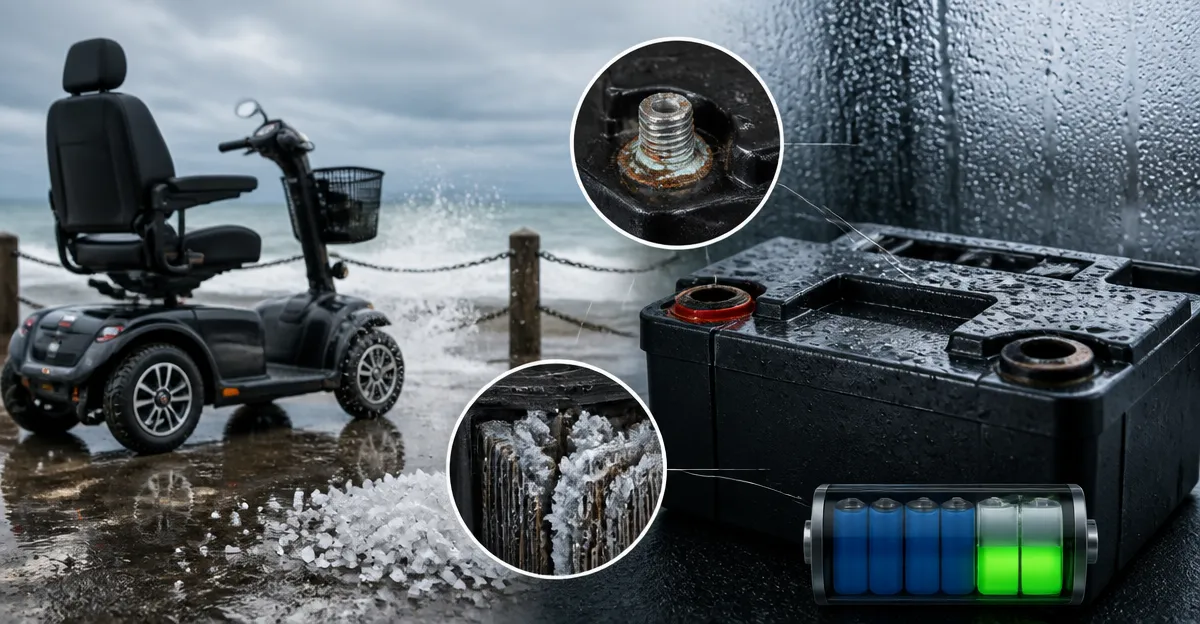
High relative humidity creates a conductive film on battery terminals, increasing the risk of stray current paths that accelerate self‑discharge. Moisture can also seep into vent seals, causing internal corrosion of the lead plates and reducing the effective capacity of the battery. Over time, the electrolyte may become diluted, leading to lower voltage under load and premature failure. Regular inspection of terminal cleanliness and vent integrity mitigates these effects.
One effective strategy is to use batteries with robust vent designs and sealed construction. The Energizer EN35-12 Battery incorporates a valve‑regulated, spill‑proof design that prevents acid leakage and includes over‑pressure venting, making it well‑suited for humid environments. Its low self‑discharge rate ensures the battery remains ready for action even after extended storage in damp conditions.
Salt Exposure and Corrosion Risks
Coastal regions expose mobility devices to airborne salt particles that settle on battery terminals and connectors. Sodium chloride is highly conductive and accelerates galvanic corrosion, especially on copper or aluminum terminal lugs. Corrosion creates resistance, causing voltage drops and heat buildup during high‑current draws, which can damage both the battery and the device’s controller.
Choosing batteries with corrosion‑resistant terminals and protective coatings reduces these risks. The Mighty Max 12V 12Ah Scooter Battery (2-Pack) features nut‑and‑bolt terminals that are easy to clean and replace, and its UL certification confirms compliance with safety standards for harsh environments. Additionally, the battery’s AGM construction prevents electrolyte spillage, limiting salt ingress.
Product Recommendations for Moisture‑Prone Environments
When selecting a replacement battery, consider both capacity and protective features. For users requiring higher capacity (35 Ah) and robust sealing, the Energizer EN35-12 Battery offers 35 Ah at 12 V, UL and CE certifications, and a two‑year warranty. Its AGM technology provides low self‑discharge and resistance to vibration, making it ideal for wheelchairs and scooters used in humid climates.
For lower‑capacity needs or budget‑conscious buyers, the Mighty Max 12V 12Ah Scooter Battery (2-Pack) delivers reliable power for typical scooter runtimes while offering a one‑year warranty and UL certification. Its compact dimensions allow easy installation in confined battery compartments.
The Casil 12V 12Ah Scooter Battery (2-Pack) provides a direct drop‑in replacement for Go‑Go Elite Traveller models, featuring sealed, spill‑proof construction and all‑weather reliability. Its vibration‑resistant design is advantageous for users who frequently travel on uneven terrain.
For users needing two high‑capacity units, the Mighty Max ML35-12 Battery (2-Pack) supplies 35 Ah per unit, UL certification, and a sturdy casing that resists shock. This pack is suitable for larger mobility scooters or light‑weight electric vehicles that demand longer runtimes.
Comparison and Selection Guide
| Battery | Capacity (Ah) | Price (USD) | Rating | Key Protective Features |
|---|---|---|---|---|
| Energizer EN35-12 | 35 | 99.99 | 4.5/5 (18 reviews) | Valve‑regulated spill‑proof design, low self‑discharge, UL & CE certified |
| Mighty Max 12V 12Ah (2‑Pack) | 12 | 57.99 | 4.5/5 (864 reviews) | UL certified, robust nut‑and‑bolt terminals, AGM spill‑proof |
| Casil 12V 12Ah (2‑Pack) | 12 | 59.99 | 4.6/5 (266 reviews) | Sealed spill‑proof, vibration‑resistant, all‑weather operation |
| Mighty Max ML35-12 (2‑Pack) | 35 | 144.99 | 4.3/5 (384 reviews) | UL certified, shock‑resistant housing, high discharge rate |
| Mighty Max ML35-12 (single) | 35 | 74.98 | 4.5/5 (2,465 reviews) | Spill‑proof, wide temperature range, compatible with many devices |
When choosing a battery, match the capacity to the device’s power draw and consider the environmental protections most relevant to your location. Higher capacity units are advantageous for longer trips, but they may be heavier and more expensive. Users in coastal or high‑humidity areas should prioritize batteries with sealed, vent‑regulated designs and corrosion‑resistant terminals.
Best Practices & Tips for Extending Battery Life
- Store batteries in a dry, temperature‑controlled environment; ideal storage temperature is 15‑25 °C (59‑77 °F).
- Apply a thin layer of dielectric grease to terminals after cleaning to prevent moisture‑induced corrosion.
- Charge batteries using a charger that matches the battery’s voltage and amperage specifications; avoid over‑charging which can increase internal gas pressure.
- Periodically perform a voltage check; a fully charged 12 V SLA battery should read around 12.6‑12.8 V.
- Inspect vent caps and seals for cracks; replace any damaged components promptly to maintain the sealed environment.
- When operating near salt water, rinse battery compartments with fresh water after exposure and dry thoroughly before reassembly.
Frequently Asked Questions
1. Does high humidity cause a battery to lose capacity permanently?
Moisture can accelerate self‑discharge and promote corrosion, which may reduce capacity over time if not addressed. Regular cleaning and using sealed AGM batteries can mitigate permanent loss.
2. Can I use a regular charger for a battery exposed to salty air?
Yes, provided the charger matches the battery’s voltage and amperage. However, a charger with built‑in desulfation or temperature compensation can help counteract the effects of corrosion caused by salt.
3. How often should I inspect my battery terminals in a coastal environment?
Inspect at least once a month, or after any exposure to sea spray. Clean any white or green residue with a mixture of baking soda and water, then apply dielectric grease.
4. Are UL‑certified batteries safer for humid conditions?
UL certification ensures the battery meets safety standards for construction, venting, and resistance to environmental stressors, making them a reliable choice for humid climates.
5. What is the best way to store a spare battery during winter?
Store the battery in a cool, dry place at about 50 % charge. Use a maintenance charger that provides a low trickle charge to keep the battery from deep‑discharging.
6. Can I use a 35 Ah battery in a device originally designed for 12 Ah?
Yes, provided the device’s charger can handle the larger capacity and the physical dimensions fit within the battery compartment. Verify the device’s voltage tolerance before upgrading.
7. Is it necessary to replace both batteries in a dual‑battery system at the same time?
Replacing both simultaneously ensures balanced charge and discharge cycles, extending overall system life. If one battery shows significant degradation, consider replacing both.
Conclusion
Humidity and salt are among the most common environmental threats to mobility device batteries, but understanding their effects enables owners to take proactive measures. Selecting sealed, vent‑regulated batteries such as the Energizer EN35-12 Battery or the Mighty Max 12V 12Ah Scooter Battery (2-Pack) provides a solid foundation for durability. Coupled with regular maintenance, proper storage, and corrosion‑prevention techniques, users can significantly extend battery lifespan and maintain reliable performance in challenging environments.
Products Featured in This Guide
Energizer EN35-12 Battery
Price: $99.99 | Rating: 4.5/5 (18 reviews)
Featured for its 35 Ah capacity, low self‑discharge rate, and UL/CE certifications that make it ideal for humid and salty environments.
Mighty Max 12V 12Ah Scooter Battery (2-Pack)
Price: $57.99 | Rating: 4.5/5 (864 reviews)
Featured for its UL certification, robust terminals, and affordable price, suitable for budget‑conscious users in humid regions.
Casil 12V 12Ah Scooter Battery (2-Pack)
Price: $59.99 | Rating: 4.6/5 (266 reviews)
Featured for its vibration‑resistant sealed design and all‑weather reliability, making it a solid choice for coastal users.
Mighty Max ML35-12 Battery (2-Pack)
Price: $144.99 | Rating: 4.3/5 (384 reviews)
Featured for its high 35 Ah capacity, UL certification, and rugged construction suitable for heavy‑use scooters.
Mighty Max ML35-12 Battery
Price: $74.98 | Rating: 4.5/5 (2,465 reviews)
Featured for its single‑unit affordability, spill‑proof design, and compatibility with a wide range of mobility devices.