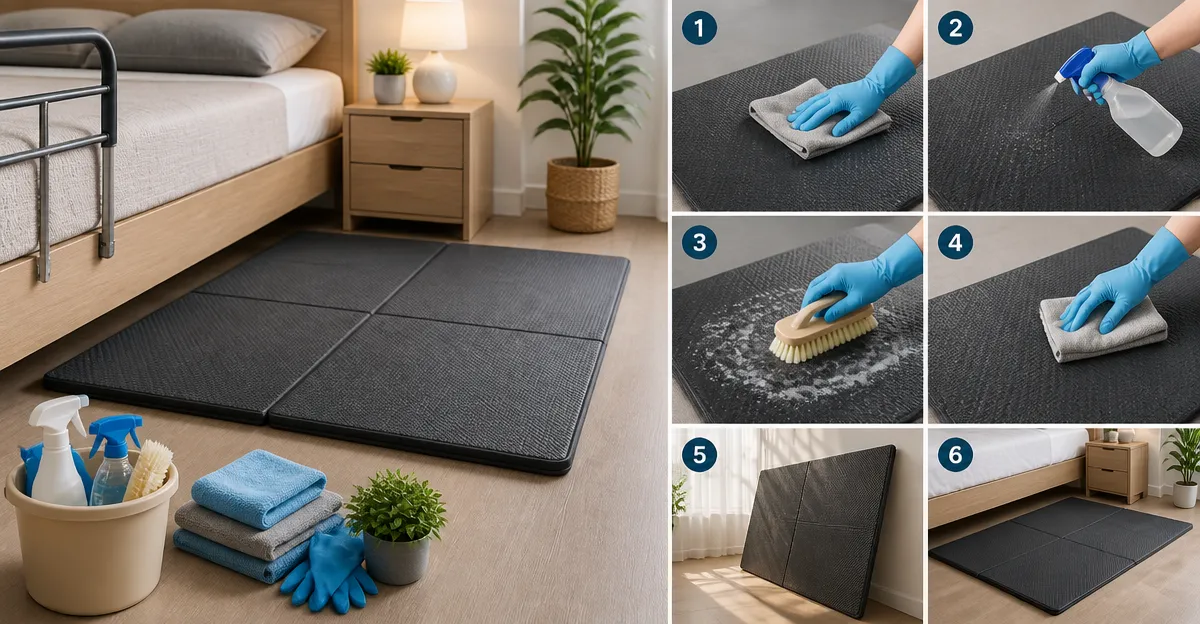
How to Clean and Maintain Bedside Fall Mats: Step‑by‑Step Guide to Sanitizing, Deodorizing, and Extending Their Lifespan
One will discover a systematic approach to keeping bedside fall mats hygienic, odor‑free, and durable. Proper maintenance protects vulnerable users and preserves the investment in safety equipment. This guide explains each phase of cleaning, the rationale behind product choices, and best‑practice tips. By following the instructions, one can minimise bacterial growth, prevent unpleasant smells, and extend the functional lifespan of the mat.
What You’ll Need
- Gentle liquid detergent (pH‑neutral)
- Soft‑bristled brush or microfiber cloth
- White vinegar or baking soda for deodorising
- Clean, dry towels
- Air‑drying space or low‑heat fan
- Optional: PaPaMat Baby Play Mat for reference on material handling
Step 1: Gather Cleaning Supplies and Inspect the Mat
Before beginning, one should assemble all cleaning agents and tools in a convenient location. Inspect the surface for tears, loose seams, or worn edges that could affect cleaning effectiveness. If the mat exhibits damage, consider replacing it with a higher‑quality option such as the OMECAL Medical Bedside Mat, which features reinforced edges and a durable PU foam core. The inspection step ensures that cleaning will not exacerbate existing flaws.
Step 2: Remove Loose Debris and Vacuum the Surface
Use a soft brush or a handheld vacuum on low suction to eliminate dust, hair, and loose particles. The anti‑slip dot‑bottom of most bedside mats, including the NYOrtho Fall Shield Mat, can trap debris that would otherwise be missed by a dry wipe. Vacuuming first prevents scratching the surface during the wet cleaning stage. Perform this step in a well‑lit area to ensure thorough coverage.
Step 3: Spot‑Treat Stains with Mild Detergent
Mix a few drops of pH‑neutral detergent with warm water to create a gentle cleaning solution. Dampen a microfiber cloth, then apply the solution to visible stains, allowing it to sit for 30 seconds before gently rubbing in a circular motion. The memory‑foam core of the PaPaMat Baby Play Mat tolerates this mild approach without compromising cushioning, making it an ideal reference for similar foam‑based mats. Rinse the cloth with clean water and blot the area to remove residual soap.
Step 4: Deep Clean and Sanitize the Entire Mat
Fill a basin or bathtub with lukewarm water and add a tablespoon of white vinegar; the acidity neutralises bacteria while remaining safe for OEKO‑TEX certified fabrics. Submerge the mat if it is lightweight, or wipe the surface thoroughly with a vinegar‑dampened cloth if the mat is large. The OMECAL Medical Bedside Mat, constructed from high‑quality compressed PU foam, benefits from this sanitising step because the foam absorbs the solution without warping. Allow the mat to remain damp for two minutes, then rinse with clean water to eliminate any vinegar residue.
Step 5: Deodorise the Mat
After rinsing, sprinkle a thin layer of baking soda across the surface and let it sit for 15 minutes. Baking soda absorbs lingering odours caused by sweat or spills, a common issue for mats used nightly. For the NYOrtho Fall Shield Mat, the non‑slip rubber backing does not retain the powder, ensuring that the deodorising agent can be easily removed. Vacuum or brush away the baking soda, then perform a final wipe with a damp cloth to ensure no granules remain.
Step 6: Dry the Mat Completely
Pat the mat with clean, dry towels to remove excess moisture, then lay it flat in a well‑ventilated area. Direct sunlight should be avoided because prolonged UV exposure can degrade the foam’s elasticity. Using a low‑heat fan accelerates drying without risking heat damage. The mat should be completely dry before it is repositioned beside a bed or crib, as residual dampness can promote mould growth.
Step 7: Store or Re‑Position the Mat Properly
When the mat is not in use, roll it loosely rather than folding to preserve the memory‑foam structure. Store the rolled mat in a breathable bag to avoid moisture accumulation. If the mat will remain beside a bed, ensure the anti‑slip dot‑bottom is in full contact with the floor to maintain safety. Regularly checking the placement prevents the mat from shifting, which could create new tripping hazards.
Tips & Pro Tips
- Test any cleaning solution on a small, inconspicuous area before full application.
- Avoid bleach or harsh chemicals; they can degrade the OEKO‑TEX certified fabric and compromise safety certifications.
- Rotate the mat every few weeks to distribute wear evenly across the surface.
- For heavy‑use environments, consider a protective waterproof cover that can be removed and washed separately.
Troubleshooting
Problem: Persistent odour after cleaning.
Solution: Repeat the baking soda deodorising step and ensure the mat is fully dried before use.
Problem: Stubborn stains remain.
Solution: Apply a mixture of equal parts white vinegar and water, let it sit for five minutes, then gently scrub with a soft brush.
Conclusion
One now possesses a complete, professional method for cleaning, sanitising, and maintaining bedside fall mats. Consistent care prevents bacterial growth, eliminates odours, and safeguards the structural integrity of the mat. By employing the recommended products and following the step‑by‑step protocol, one can extend the useful life of safety mats for infants, seniors, or anyone requiring bedside protection. Regular maintenance not only protects health but also preserves the investment in high‑quality safety equipment.
Products Mentioned in This Guide
Frequently Asked Questions
How often should a bedside fall mat be cleaned?
Clean the mat at least once a week, or immediately after spills, to keep it hygienic and odor‑free.
What type of detergent is safe for bedside fall mats?
Use a gentle, pH‑neutral liquid detergent to avoid degrading the mat’s material.
Can I use vinegar or baking soda to deodorize the mat?
Yes, apply white vinegar or a baking‑soda paste, let it sit briefly, then rinse to neutralize odors.
Should I machine‑wash bedside fall mats?
Most mats should be hand‑washed; machine washing can damage seams and reduce lifespan.
How should I dry a cleaned bedside fall mat?
Air‑dry the mat flat in a well‑ventilated area or use a low‑heat fan; avoid direct sunlight or high heat.