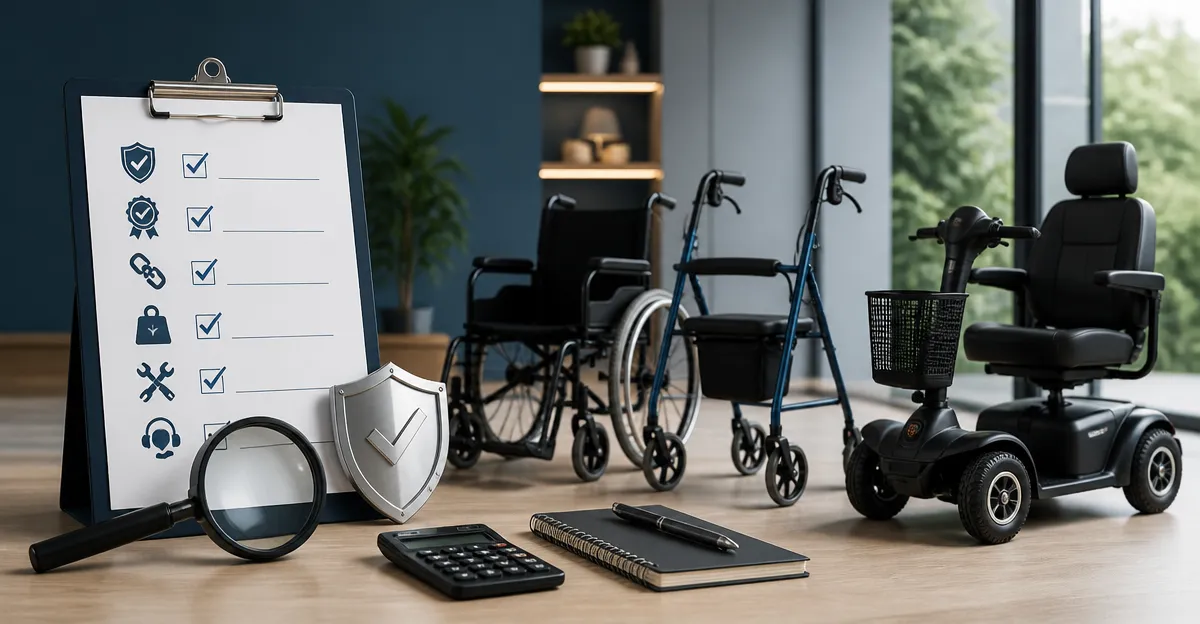
How to Evaluate Mobility Aid Warranties and Durability: The Complete Buyer's Guide & Checklist
Introduction
Choosing a mobility aid is a significant investment in independence, safety, and comfort. This guide explains how to scrutinize warranty language, gauge durability, and match features to personal needs. Readers will learn the essential terminology, practical evaluation methods, and a checklist that simplifies decision‑making. By the end, one will be equipped to select a reliable product without unnecessary risk.
Background & Context
Mobility aids such as rollators, walkers, and safety rails have evolved from simple metal frames to engineered devices with ergonomic seats, puncture‑proof tires, and adjustable components. Manufacturers typically offer warranties ranging from one to several years, but the scope of coverage varies widely. Durability depends on material quality, joint design, and real‑world usage patterns, all of which influence long‑term value. Understanding these fundamentals prevents costly surprises after purchase.
Key Concepts for Evaluating Warranties
Warranty terms are legal promises that protect the buyer against defects. First, identify the warranty duration; a longer period often signals confidence in product longevity. Second, examine what is covered: frame, wheels, brakes, and upholstery may be included or excluded. Third, note any required maintenance actions—some warranties become void if the user fails to follow cleaning or tightening instructions. Finally, check the claim process: does the company provide a prepaid return label, or must the buyer cover shipping?
For example, the VOCIC Z21 Rollator Walker includes a three‑mode braking system and a reinforced aluminum frame, yet the seller advises users to verify that all fasteners are secure before each use. Such usage notes are often tied to warranty validity, making them a critical read.
Assessing Durability Factors
Durability is a function of material strength, design architecture, and user load capacity. Aluminum alloys provide a lightweight yet sturdy backbone, while thickened steel tubes resist bending under a 350‑lb (or higher) load. Look for reinforced joints, such as welded corners or patented locking mechanisms, which reduce the likelihood of loosening over time.
The Lianjindun Toilet Safety Rails boast corrosion‑resistant aluminum and a 350‑lb capacity, indicating a high durability threshold for bathroom environments that are prone to moisture. Their non‑slip foam grips and optional suction‑cup feet further protect the product from wear caused by frequent adjustments.
Evaluating Material Quality and Construction
High‑quality materials are often highlighted in product specifications. Puncture‑proof rubber tires, for instance, extend the life of a rollator used on uneven terrain. Breathable mesh backrests prevent moisture buildup, which can degrade fabrics and metal fasteners. When a product lists a waterproof seat cushion, as the VOCIC Z21 Rollator Walker does, it signals attention to long‑term comfort and material resilience.
In the case of the KingPavonini Bed Rail, the ASTM‑approved 380‑lb rating demonstrates compliance with rigorous safety standards, ensuring that the metal brackets will not deform under normal use. Such certifications are valuable indicators of material integrity.
Customer Feedback and Real‑World Performance
Ratings and reviews provide insight into durability that specifications alone cannot reveal. A 4.6/5.0 rating across thousands of reviews, as seen with the Drive Medical Rollator Walker, suggests consistent performance. Positive comments frequently mention sturdy frames, reliable brakes, and smooth folding mechanisms, reinforcing the product’s durability claims.
Conversely, some reviewers of the Drive Medical Folding Walker note that the unit excels on indoor surfaces but may feel less stable on rough outdoor terrain. Such nuanced feedback helps buyers align expectations with actual use cases.
Product Recommendations Within the Guide
When a warranty is clear and durability is proven, a product becomes a reliable recommendation. The following selections illustrate how each category meets the evaluation criteria:
- Rollator with Seat: VOCIC Z21 Rollator Walker – lightweight (22 lb), 350 lb capacity, 8‑inch puncture‑proof tires, three‑mode brakes, and a waterproof ergonomic seat.
- Bathroom Safety: Lianjindun Toilet Safety Rails – adjustable height/width, aluminum construction, non‑slip foam grips, and easy tool‑free installation.
- Bed Assistance: KingPavonini Bed Rail – ASTM‑approved, 380 lb capacity, height‑adjustable, tool‑free setup, and a padded non‑slip handle.
- Standard Rollator: Drive Medical Rollator Walker – steel frame, 7.5‑inch wheels, seat with backrest, 350 lb capacity, and a proven 4.6‑star rating.
- Lightweight Folding Walker: Drive Medical Folding Walker – aluminum frame, dual push‑button folding, 5‑inch wheels, and a 4.7‑star rating.
Comparison & Selection Guide
| Feature | VOCIC Z21 Rollator | Drive Medical Rollator | Drive Medical Folding Walker | Lianjindun Safety Rails | KingPavonini Bed Rail |
|---|---|---|---|---|---|
| Weight Capacity | 350 lb | 350 lb | 350 lb | 350 lb | 380 lb |
| Maximum User Weight | 350 lb | 350 lb | 350 lb | 350 lb | 380 lb |
| Wheel Size | 8 in (puncture‑proof) | 7.5 in (caster) | 5 in (front) + glide caps | N/A | N/A |
| Seat Included | Yes, ergonomic waterproof | Yes, padded with backrest | No | N/A | No |
| Adjustability | Dual height, 3‑level seat | Height lever, fold‑down backrest | Height lock | Height 24‑31 in, width 20‑25 in | Height 17.6‑20.9 in, length 28.6‑34.7 in |
| Warranty Highlights | Standard manufacturer warranty (check listing) | Standard manufacturer warranty (check listing) | Standard manufacturer warranty (check listing) | Standard manufacturer warranty (check listing) | Standard manufacturer warranty (check listing) |
| Average Rating | 4.6/5 (6,432 reviews) | 4.6/5 (51,116 reviews) | 4.7/5 (42,541 reviews) | 4.6/5 (4,029 reviews) | 4.6/5 (2,330 reviews) |
| Price (USD) | $68.88 | $53.32 | $27.69 | $49.99 | $39.98 |
The table above condenses the most relevant specifications for quick side‑by‑side comparison. Users should prioritize wheel size for outdoor terrain, seat comfort for extended outings, and adjustability for personal ergonomics. Warranty length and coverage should be verified on the product page before purchase.
Best Practices & Tips for Longevity
- Perform Pre‑Use Inspections: Verify that all bolts are tightened, brakes engage smoothly, and wheels rotate freely. This routine prevents premature wear and keeps warranty claims valid.
- Maintain Cleanliness: Wipe metal frames with a damp cloth after exposure to moisture, and keep seat cushions free from spills to avoid fabric degradation.
- Rotate Wheels Regularly: For rollators with pneumatic or solid tires, rotate them every few weeks to ensure even wear, especially on rough surfaces.
- Store Properly: Fold the walker according to the manufacturer’s instructions and keep it in a dry, temperature‑controlled environment to prevent rust or plastic brittleness.
- Follow Weight Limits: Exceeding the rated capacity can damage joints and void warranties; always adhere to the specified maximum user weight.
- Document Issues Promptly: If a defect appears, photograph the problem and contact the seller within the warranty window, providing proof of purchase.
Frequently Asked Questions
What does a typical mobility aid warranty cover?
Most warranties cover manufacturing defects in the frame, wheels, and braking system for a specified period, often one to two years. Consumables such as seat cushions or rubber grips may be excluded.
How can I tell if a rollator’s wheels are suitable for outdoor use?
Look for larger diameters (7‑inch or greater) and puncture‑proof or solid rubber constructions. The VOCIC Z21 Rollator Walker uses 8‑inch tires specifically marketed for all‑terrain performance.
Are adjustable height features worth the extra cost?
Adjustability enhances ergonomics, reduces strain on the back and shoulders, and extends the product’s usable lifespan across multiple users. For shared households, a dual‑adjustment system like that on the VOCIC Z21 provides significant value.
Do bathroom safety rails require professional installation?
No. The Lianjindun Toilet Safety Rails are designed for tool‑free assembly, making them ideal for renters or temporary installations.
What should I do if a product’s warranty is unclear?
Contact the seller directly through the Amazon “Ask a Question” feature or consult the manufacturer’s website. Request a written copy of the warranty terms before finalizing the purchase.
Can I use a bed rail on an adjustable‑base mattress?
Most bed rails, including the KingPavonini Bed Rail, are not recommended for adjustable bases because movement can loosen the rail’s grip.
Is a higher price always an indicator of better durability?
Not necessarily. While premium materials often correlate with longer life, user reviews and warranty specifics are more reliable indicators than price alone.
Conclusion
Evaluating warranties and durability requires a systematic approach that blends technical scrutiny with real‑world feedback. By understanding warranty scope, inspecting material quality, and consulting verified customer reviews, one can confidently select a mobility aid that will endure daily use. The checklist provided, together with the curated product recommendations, equips readers to make an informed purchase that safeguards both safety and budget.
Products Featured in This Guide
VOCIC Z21 Rollator Walker
Price: $68.88 | Rating: 4.6/5 (6,432 reviews)
Featured for its lightweight (22 lb) aluminum frame, 8‑inch puncture‑proof tires, ergonomic waterproof seat, and dual‑height adjustment that exemplify durability and warranty relevance.
Lianjindun Toilet Safety Rails
Price: $49.99 | Rating: 4.6/5 (4,029 reviews)
Featured for its corrosion‑resistant aluminum construction, 350 lb capacity, adjustable height and width, and tool‑free installation that illustrate long‑term reliability.
KingPavonini Bed Rail
Price: $39.98 | Rating: 4.6/5 (2,330 reviews)
Featured for its ASTM‑approved 380 lb rating, adjustable dimensions, non‑slip padded handle, and tool‑free setup that demonstrate robust construction.
Drive Medical Rollator Walker
Price: $53.32 | Rating: 4.6/5 (51,116 reviews)
Featured for its steel frame, 7.5‑inch wheels, seat with backrest, and extensive positive feedback that validates its durability and warranty support.
Drive Medical Folding Walker
Price: $27.69 | Rating: 4.7/5 (42,541 reviews)
Featured for its ultra‑lightweight aluminum frame, dual push‑button folding, and high rating that illustrate reliable performance at an affordable price.