How to Secure Portable Mobility Scooter Tie-Downs for Air Travel: Step‑by‑Step Guide
Introduction
Air travel with a portable mobility scooter can be a daunting experience for many travelers. This guide explains precisely how to prepare, strap, and protect a scooter for airline cargo handling, ensuring that the device arrives at the destination in optimal condition. By following the instructions, one will learn how to select appropriate tie‑down straps, position the scooter within a crate, and comply with airline regulations while minimizing the risk of damage.
The information presented is valuable because mobility scooters represent a significant financial investment and a vital independence tool for many adults and elderly passengers. Proper securing techniques reduce the likelihood of costly repairs, prevent delays at the airport, and provide peace of mind throughout the journey.
What You’ll Need
- Vive 4 Wheel Mobility Scooter – the portable scooter to be shipped.
- Yuntop Soft Loop Tie Down Straps (6 Pack) – heavy‑duty straps for securing the scooter to a crate.
- Clay&Fire Lashing Straps (4 Pack) – supplemental straps for additional tension and load distribution.
- Sturdy travel crate or airline‑approved container (minimum internal dimensions 48" x 30" x 48").
- Protective padding such as foam corner protectors or moving blankets.
- Utility knife or scissors for cutting excess strap length.
Step 1: Verify Airline Requirements
Before packing, review the specific airline’s policies for mobility devices. Most carriers require that the scooter be disassembled into manageable components, that the battery be removed or locked, and that the total weight does not exceed the cargo limit. Confirm that the crate dimensions comply with the airline’s size restrictions and that the battery complies with hazardous‑material regulations.
By completing this verification early, one avoids last‑minute surprises that could result in denied boarding or additional fees.
Step 2: Disassemble the Scooter for Transport
The Vive 4 Wheel Mobility Scooter is designed for easy disassembly. Follow the manufacturer’s instructions to separate the tiller, seat, rear module, and front wheels. The rear section, weighing only 29 pounds, is the heaviest component and should be positioned at the bottom of the crate for stability.
During disassembly, keep all bolts and small hardware in a labeled zip‑lock bag. This practice prevents loss of parts and simplifies reassembly upon arrival.
Step 3: Prepare the Crate and Add Protective Padding
Line the bottom of the crate with a layer of foam padding or a moving blanket. Place the rear module first, then stack the front wheel assembly and tiller on top. Fill any gaps with additional padding to prevent shifting during handling.
Proper padding distributes impact forces evenly and protects the scooter’s frame, battery compartment, and electronic controls from vibration and compression.
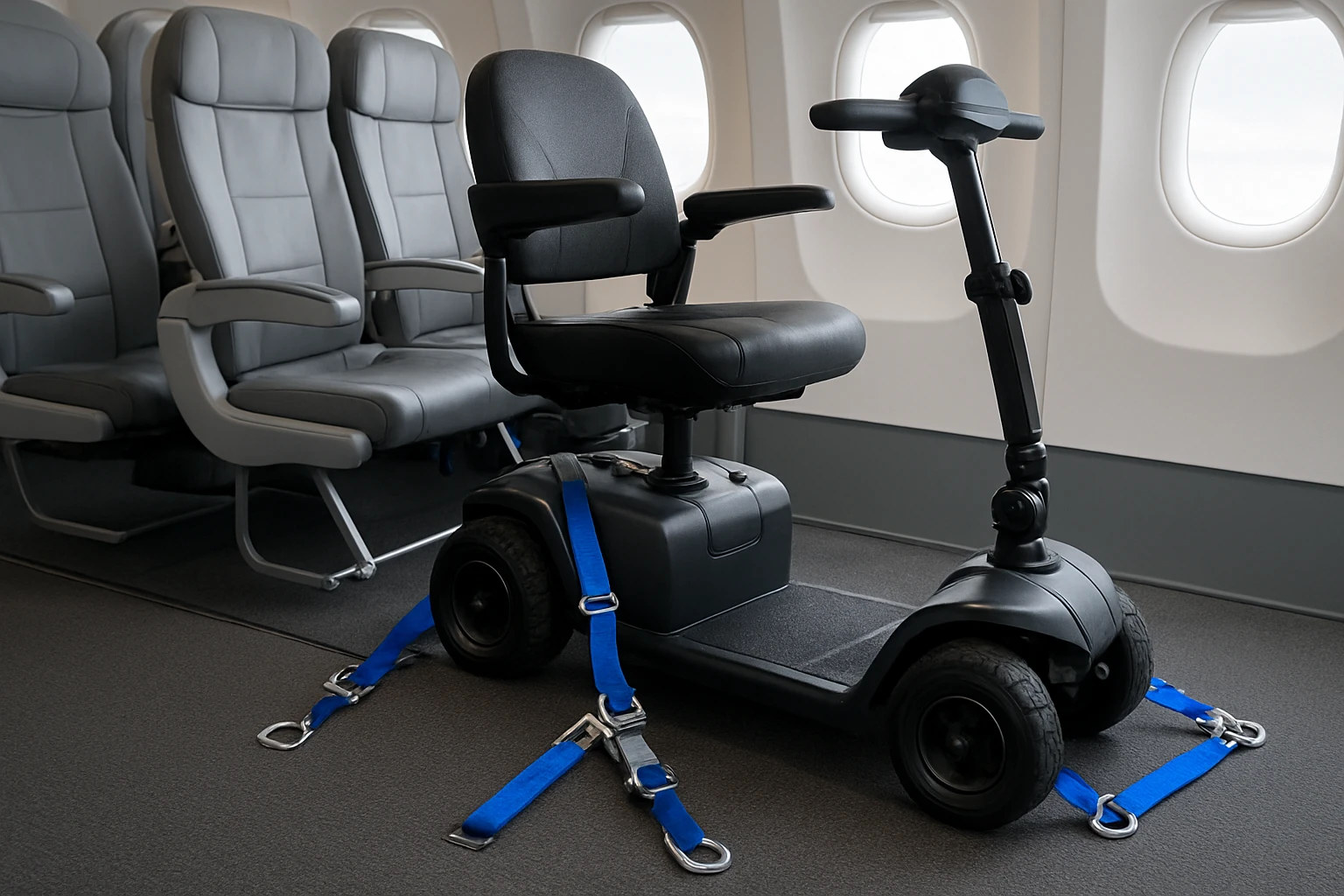
Step 4: Attach Primary Tie‑Down Straps
Use the Yuntop Soft Loop Tie Down Straps (6 Pack) as the primary securing method. Each strap offers a 1,500‑lb capacity with a 4,500‑lb break strength, ensuring ample safety margin for a scooter that weighs less than 250 pounds.
Features that make these straps ideal for this step include:
- Flat‑free, non‑marking 8‑inch loops that will not damage the scooter’s paint or surface.
- Adjustable length, allowing the user to achieve tight tension without over‑tightening.
- Bright color for easy visual inspection during loading.
Thread each strap through the soft loops on the scooter’s frame and secure them to the interior anchor points of the crate. Pull the strap until the scooter is snug but not compressed. Tighten the cam buckle until the tension indicator shows a firm lock.
Step 5: Apply Supplemental Lashing Straps for Redundancy
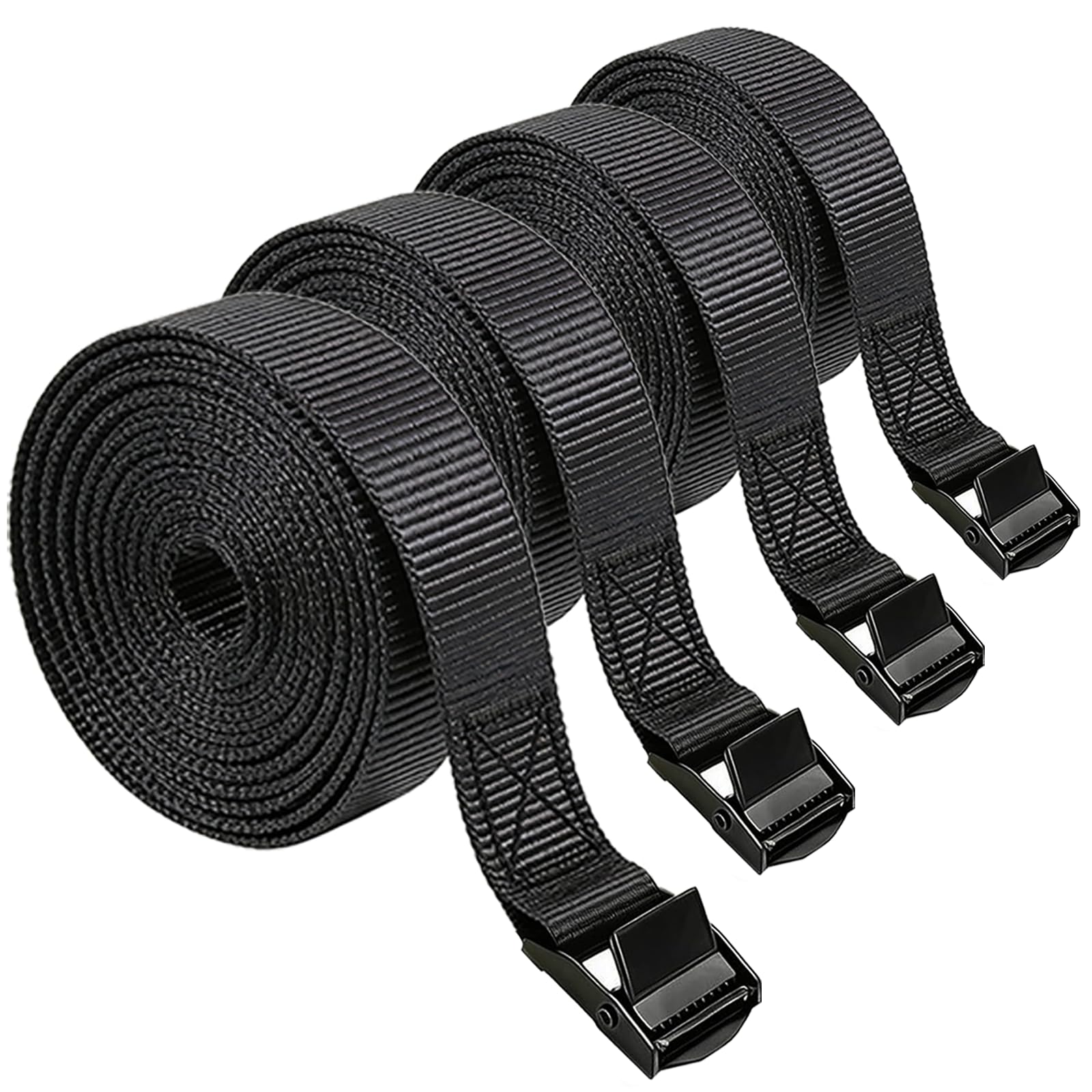
After the primary straps are in place, add the Clay&Fire Lashing Straps (4 Pack) to reinforce the load. These straps are 1‑inch wide, 5‑feet long, and rated for 660‑lb capacity, making them suitable for secondary tensioning.
Advantages of these straps include:
- Thin profile that does not interfere with the primary strap loops.
- Carbon‑steel cam buckles that lock quickly and release without tools.
- Wear‑resistant polyester construction for long‑term durability.
Wrap each lashing strap around the crate’s outer corners, crossing over the scooter to create a criss‑cross pattern. This arrangement distributes forces across multiple axes, reducing the chance of the scooter shifting if the crate is jostled.
Step 6: Perform a Final Tension Check
Inspect each strap for proper tension. The cam buckles on both the Yuntop and Clay&Fire straps should be fully engaged, and the color‑coded battery indicator on the Vive scooter should display a full charge (if the battery remains installed). Gently shake the crate; there should be no audible movement of the scooter components.
If any strap appears loose, release the buckle, adjust the length, and re‑tighten. Over‑tightening can damage the scooter’s frame or battery housing, so aim for a firm but gentle hold.
Step 7: Label the Crate and Complete Documentation
Attach a clear label that reads "FRAGILE – MOBILITY SCOOTER" and include the airline’s cargo tracking number. Additionally, provide a copy of the scooter’s user manual and battery certification in a sealed plastic bag inside the crate. This documentation assists ground staff in handling the item correctly and speeds up customs clearance.
Tips & Pro Tips
- Battery Safety: If the airline requires battery removal, place the battery in a fire‑resistant container and label it as a lithium‑ion battery.
- Weather Protection: Wrap the entire crate in a waterproof cover to guard against rain during loading and unloading.
- Weight Distribution: Position the heaviest component (rear module) low and centered to lower the crate’s center of gravity.
- Double‑Check Regulations: Some airlines impose a maximum of 150 pounds for cargo; verify that the combined weight of scooter and straps does not exceed this limit.
- Pro Tip: Use a small piece of non‑slip rubber under the primary straps to increase friction and reduce the chance of slippage.
Troubleshooting
Problem: Straps slip during transport.
Solution: Ensure the strap loops are seated tightly against the scooter’s frame. If slippage persists, add a layer of rubber or a second strap over the same loop for extra grip.
Problem: Crate is marked as overweight.
Solution: Remove any unnecessary padding or replace the heavy moving blankets with lighter foam sheets. Verify the airline’s weight limit before final packing.
Conclusion
Securing a portable mobility scooter for air travel requires careful preparation, the right tie‑down tools, and adherence to airline policies. By disassembling the scooter, protecting it with padding, and using the Yuntop Soft Loop Tie Down Straps together with the Clay&Fire Lashing Straps, one creates a secure, compliant package that minimizes damage risk. Follow the step‑by‑step instructions, apply the tips, and travel with confidence, knowing that the scooter will arrive ready for use.
Products Mentioned in This Guide
Frequently Asked Questions
What type of tie‑down straps are recommended for securing a portable mobility scooter in cargo?
Use heavy‑duty, ratchet‑type straps with a minimum 1,500‑lb rating and soft webbing to avoid scratching the scooter.
How should I position the scooter inside the shipping crate?
Place the scooter upright, centered, and against the crate walls, with the battery removed or secured according to airline rules.
Are there specific airline regulations I must follow when shipping a mobility scooter?
Yes, airlines require a certified crate, weight limits, and documentation of the scooter’s dimensions and battery type.
Can I use the scooter’s original battery for air travel?
Most airlines prohibit lithium‑ion batteries in cargo; you must either remove the battery for separate transport or use an approved, discharged battery.
What steps can I take to prevent damage during handling?
Wrap the scooter in protective padding, secure it with multiple straps, and label the crate with “Fragile – Handle with Care.”

