Introduction
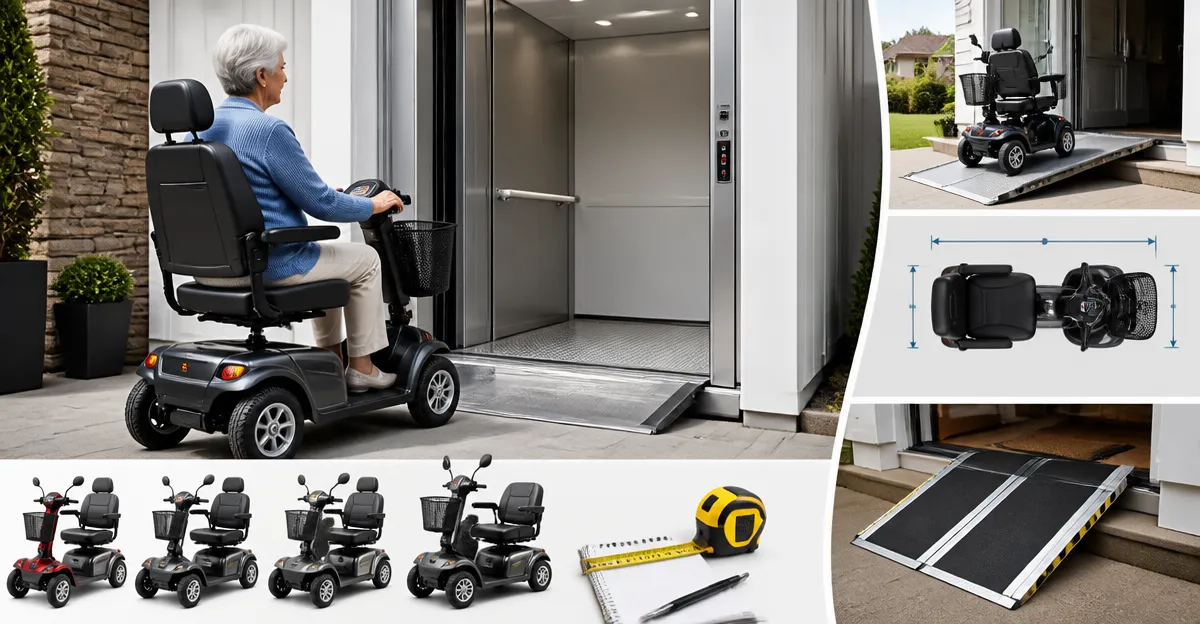
This guide explains how to measure, select, and verify that a mobility scooter will safely navigate home lifts and ramps. Readers will learn essential dimensions, weight limits, turning radii, and battery considerations. The article also recommends five high‑quality scooters that meet common residential requirements. By following the steps outlined, one can avoid costly modifications and ensure a comfortable, independent experience.
Background and Context
Mobility scooters are electric vehicles designed to assist individuals with limited walking ability. They differ from power wheelchairs in that they often feature larger wheels, higher speed, and a standing‑seat configuration. When used indoors, a scooter must fit within the spatial constraints of elevators, doorways, and ramps. Key concepts include wheelbase length, turning radius, overall weight, and load capacity. Understanding these parameters helps homeowners evaluate whether a scooter can be accommodated without structural changes.
Measuring Your Home Lift and Ramp
The first step is to obtain accurate measurements of the lift car and any ramps leading to the entrance. Measure the interior width, depth, and height of the lift, noting any protruding handrails. For ramps, record the width, slope angle, and landing length. Most residential lifts have a clear opening of 36 to 48 inches; a scooter with a turning radius greater than half that width may struggle to turn. A ramp slope should not exceed 1:12 (approximately 8.3 degrees) to maintain stability at the scooter’s rated speed.
Record these dimensions in a simple table and compare them against the specifications of each scooter. When in doubt, add a safety margin of two inches to each measurement to account for tolerances and user maneuvering.
Key Scooter Specifications to Consider
Three primary specifications determine whether a scooter can fit through a lift or ascend a ramp safely:
- Overall Width and Depth: The combined width of the frame, wheels, and any side accessories. A narrower scooter reduces the risk of contact with lift walls.
- Turning Radius: The diameter of the smallest circle the scooter can complete. A tighter radius (30‑34 inches) is ideal for confined spaces.
- Weight and Load Capacity: The scooter’s own weight plus the rider’s weight must not exceed the lift’s maximum payload, typically 500‑600 pounds.
Additional factors such as battery placement, foldability, and disassembly options can influence transport convenience.
Product Recommendations
Below are five scooters that align with common residential lift and ramp dimensions. The first mention of each product includes a clickable link to its Amazon page.
Ladyroad iris·3 Scooter
The Ladyroad iris·3 Scooter is a three‑wheel model weighing between 38 and 44 pounds. Its 34‑inch turning radius enables smooth navigation in tight hallways and lift cars. Dual‑battery options provide 16‑24 miles of range, and the scooter supports a 300‑pound load capacity. With a top speed of 5 mph and a compact fold, it is airline‑friendly and ideal for users who require independent handling. The product holds a perfect 5‑star rating from two reviewers.
ABELTA 4‑Wheel Senior Scooter
The ABELTA 4‑Wheel Senior Scooter offers a sturdy four‑wheel platform and a 20‑mile range on a single charge. Its 6.2 mph motor and adjustable seat accommodate riders from 4'11" to 5'11". The scooter features anti‑tip rear wheels and an auto‑stop brake, enhancing safety on ramps. At 549.99 USD, it provides excellent value and currently has a 5‑star rating from seven reviewers. The scooter’s width of approximately 28 inches fits most residential lifts.
SUNDERWELL 3‑Wheel Foldable Scooter
The SUNDERWELL 3‑Wheel Foldable Scooter is exceptionally lightweight at 50 pounds and folds in five minutes. It includes two detachable 48 V batteries delivering up to 8 miles per charge, suitable for short trips between rooms. The scooter’s 300‑pound capacity and 3.5 mph top speed make it safe for indoor use. Its 8‑inch solid tires provide reliable traction on ramps with a gentle 10‑degree incline. The product carries a 5‑star rating from a single review.
Rascal Venture Scooter
The Rascal Venture Scooter is an FDA Class II medical device with a 300‑pound capacity and a 10‑mile range. Its three 8‑inch solid tires and regenerative brakes enable smooth operation on uneven surfaces. The scooter disassembles into five lightweight pieces, the heaviest weighing 29.5 pounds, simplifying transport in a vehicle trunk. With a 4.8‑star rating from 75 reviewers, it is a trusted choice for users who need a reliable, compact solution.
ATmobi X3 Scooter
The ATmobi X3 Scooter combines a 31.7‑pound frame with a 33‑inch turning radius, making it highly maneuverable in narrow lift cars. Dual removable lithium batteries offer 20‑32 miles of range depending on capacity. The scooter includes a padded 2‑inch seat, under‑seat basket, and electromagnetic braking system. It is rated 5 stars by two reviewers and priced at 799.99 USD.
Comparison and Selection Guide
To select the most appropriate scooter, compare the following criteria against your home’s specifications:
| Feature | Ladyroad iris·3 | ABELTA 4‑Wheel | SUNDERWELL 3‑Wheel | Rascal Venture | ATmobi X3 |
|---|---|---|---|---|---|
| Weight (lb) | 38‑44 | ~70 | 50 | ~75 (disassembled) | 31.7 |
| Turning Radius (in) | 34 | ~36 | ~38 | ~35 | 33 |
| Maximum Load (lb) | 300 | 300 | 300 | 300 | 265 |
| Range (mi) | 16‑24 | 20 | 8 | 10 | 20‑32 |
| Price (USD) | 799.99 | 549.99 | 399.99 | 699.00 | 799.99 |
| Rating | 5/5 (2) | 5/5 (7) | 5/5 (1) | 4.8/5 (75) | 5/5 (2) |
For lifts with a width of 36 inches, the ATmobi X3 and Ladyroad iris·3 provide the tightest turning radii, reducing the likelihood of contact. If weight capacity is paramount, the Rascal Venture and ABELTA models both support 300‑pound riders. Users who prioritize ultra‑light weight and rapid folding may favor the SUNDERWELL scooter.
Best Practices and Tips
Follow these actionable recommendations to ensure a safe fit:
- Measure twice, record once. Use a steel tape measure and note any irregularities such as protruding handrails.
- Verify lift payload limits. Add the scooter’s weight, rider weight, and any cargo to stay below the maximum rating.
- Test turning radius on a flat surface before attempting lift entry. Mark a 34‑inch circle and practice maneuvering within it.
- Check ramp slope compliance. If the ramp exceeds 8.3 degrees, consider a scooter with a higher torque motor or a motorized lift platform.
- Secure batteries according to manufacturer instructions. Improperly secured batteries can shift during travel and affect balance.
- Maintain tire pressure (if applicable) and inspect brakes before each use. Safety features such as anti‑tip wheels are crucial on inclined ramps.
- Keep a copy of the scooter’s user manual in the vehicle or at home for quick reference during emergencies.
Frequently Asked Questions
What is the minimum lift width required for a three‑wheel scooter?
Most three‑wheel scooters need at least 34 inches of clear width to accommodate the turning radius and wheel overhang. Adding a two‑inch safety margin is advisable.
Can I use a scooter on a ramp with a 10‑degree incline?
Only scooters with a motor rated for steep inclines and a low center of gravity should be used on ramps steeper than 8.3 degrees. The Rascal Venture and ABELTA models include anti‑tip rear wheels that help maintain stability on such slopes.
How do I determine if my lift can support the scooter’s weight?
Locate the lift’s payload rating, usually posted inside the car door. Add the scooter’s weight, rider weight, and any additional cargo. The total must not exceed the posted limit.
Is it necessary to remove batteries before placing the scooter in a lift?
Most manufacturers design scooters so that batteries remain installed during lift travel. However, removing batteries can reduce overall weight and simplify handling for very low‑capacity lifts.
Do I need a special permit to install a ramp for a scooter?
In most residential settings, a permanent ramp does not require a permit if it complies with local building codes. Portable ramps are generally exempt, but always verify with local authorities.
Conclusion
Selecting a mobility scooter that fits home lifts and ramps requires careful measurement, understanding of key specifications, and awareness of safety features. By applying the measurement techniques, comparing the specifications outlined in the table, and following best‑practice tips, one can achieve a secure and comfortable indoor mobility solution. The recommended scooters each address different priorities, ensuring that readers can find a model that aligns with their spatial constraints and performance needs.
Products Featured in This Guide
Ladyroad iris·3 Scooter
Price: $799.99 | Rating: 5/5 (2 reviews)
Featured for its ultra‑light weight, 34‑inch turning radius, and dual‑battery range, making it ideal for narrow lifts.
ABELTA 4‑Wheel Senior Scooter
Price: $549.99 | Rating: 5/5 (7 reviews)
Featured for its adjustable seat, safety brakes, and 20‑mile range, suitable for users who need extra stability.
SUNDERWELL 3‑Wheel Foldable Scooter
Price: $399.99 | Rating: 5/5 (1 review)
Featured for its 50‑pound weight, quick folding mechanism, and detachable batteries for short indoor trips.
Rascal Venture Scooter
Price: $699.00 | Rating: 4.8/5 (75 reviews)
Featured for its FDA Class II medical device status, swift‑release disassembly, and reliable performance on ramps.
ATmobi X3 Scooter
Price: $799.99 | Rating: 5/5 (2 reviews)
Featured for its extremely light frame, 33‑inch turning radius, and removable battery options for flexible range.