Introduction
One often encounters a need to move patients safely in a home or small‑facility environment. The market offers several mechanical and powered lifts that claim to reduce caregiver strain while preserving patient dignity. This article compares three Amazon‑listed lifts: the Vive Sit‑to‑Stand Patient Lift, the Joerns Hoyer Electric Patient Lift, and the Vive Hydraulic Patient Lift. Understanding how each device performs in terms of price, features, and reliability assists caregivers in selecting the most appropriate tool for their specific situation.
The comparison focuses on objective data such as price, weight capacity, and warranty, as well as subjective feedback from verified Amazon reviewers. By the end of the article, one will have a clear picture of which lift delivers the best value for a given care environment.
Individual Product Overviews
Vive Sit‑to‑Stand Patient Lift
The Vive Sit‑to‑Stand Patient Lift is marketed as a stand‑assist device for individuals who can support 60‑70% of their own body weight. It features a steel frame, four swivel casters, and a dual‑locking brake system. The base measures 26 inches at its widest point, which may restrict passage through narrow doorways. The lift supports up to 400 lb and includes cushioned handrails, shin rests, and a split seat pad for comfort. It carries a two‑year guarantee and is eligible for FSA/HSA reimbursement.
Customer feedback highlights its life‑changing impact: "This machine was a life saver for my husband… it handled a 275 lb man easily" (positive review). Another reviewer praised its durability, noting only a single wheel required replacement after a year of use. Assembly is described as "somewhat of a challenge" but ultimately achievable.
Joerns Hoyer Electric Patient Lift
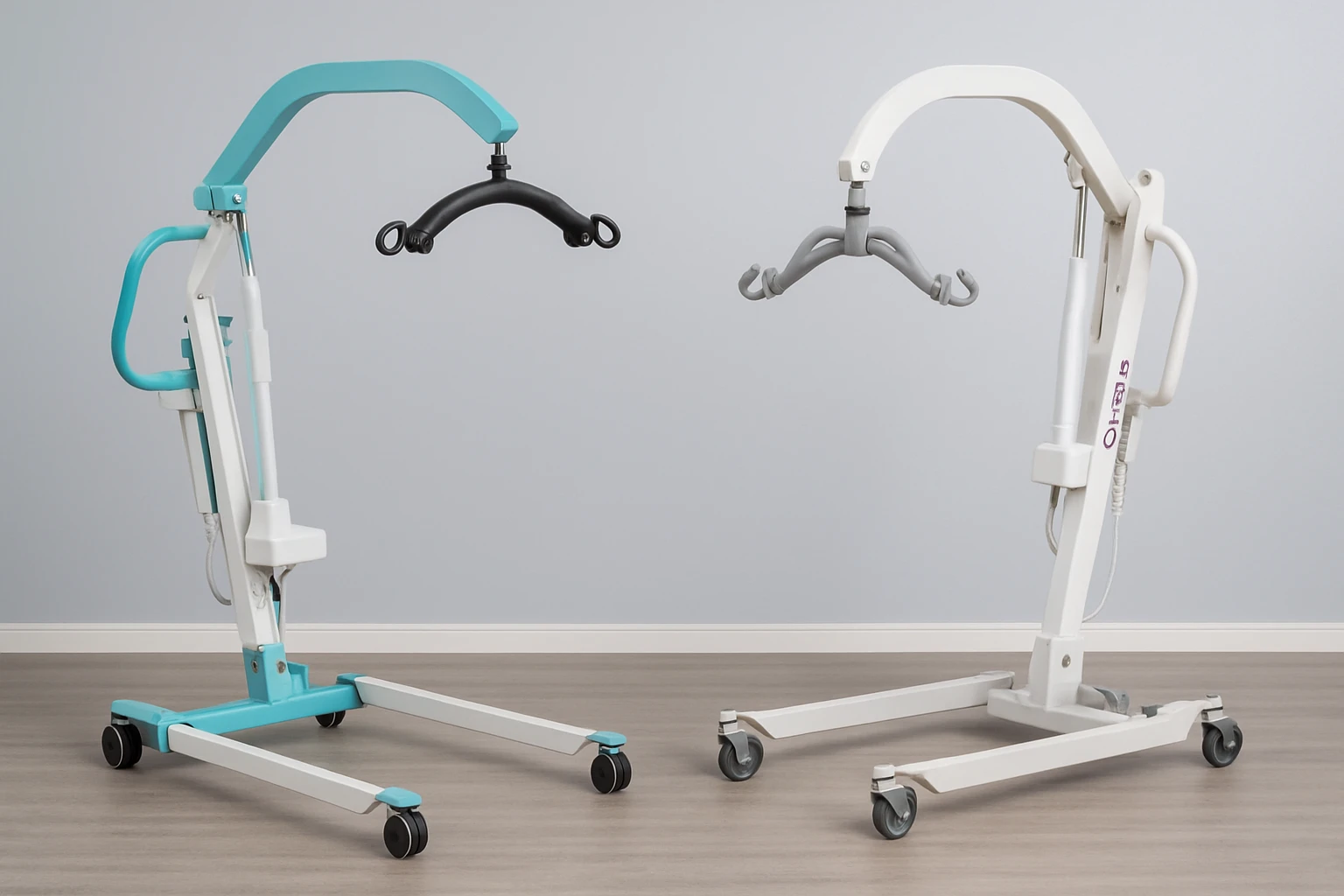
The Joerns Hoyer Electric Patient Lift is a powered hoist with a 400 lb safe working load. Its most distinctive feature is an adjustable U‑base that can be widened or narrowed via a simple handle, facilitating transfers in confined spaces such as bathrooms. The lift includes ergonomic handle grips, a mechanical down‑release lever for non‑powered lowering, and protective leg and caster guards to prevent damage to walls and furniture. A six‑point cradle and a low base clearance of 5.5 inches allow the device to roll under most chairs and beds. The manufacturer offers a limited lifetime warranty on the frame and a two‑year warranty on all parts.
Positive reviewers emphasize the lift’s value: "It seems pricey, but it works just as well as similar hoists costing much more" and "This lift saved my back" after a spouse’s stroke. Negative feedback mentions early quality issues, such as a broken plastic compartment and a welded joint failure after three months of use.
Vive Hydraulic Patient Lift
The Vive Hydraulic Patient Lift is a manually operated hydraulic hoist designed for home use. Its base adjusts from 22 to 30 inches using foot pedals, and the low‑profile design offers only 5 inches of clearance, enabling the lift to slide under low beds and furniture. The device supports up to 400 lb and includes a 24‑to‑62 inch lifting range with a 31.5‑to‑42 inch fork range. The hydraulic pump provides smooth, controlled motion, and the lift is backed by a two‑year guarantee.
Reviewers commend the clear assembly instructions and sturdy construction: "The lift itself is extremely sturdy and feels very well‑built". One reviewer noted the lift’s weight and storage requirements, stating that it is "very heavy" and not truly portable despite the title.
Head‑to‑Head Comparison
Price and Value
The Vive Sit‑to‑Stand is priced at $314.99, making it the most affordable option among the three. The Vive Hydraulic Lift costs $479.99, representing a moderate increase for hydraulic operation. The Joerns Hoyer Electric Lift commands a premium price of $1,598.00, reflecting its powered mechanism and advanced ergonomic features. When evaluating value, one must consider the intended use; a manual lift may be sufficient for occasional transfers, whereas a powered lift can reduce caregiver fatigue during frequent use.
Features and Specifications
All three lifts share a 400 lb capacity and steel construction. The Vive Sit‑to‑Stand provides a fixed 26‑inch base, swivel casters, and a split seat cushion. The Joerns Hoyer Electric offers an adjustable U‑base, six‑point cradle, and a low 5.5‑inch clearance, plus electric operation with a down‑release lever. The Vive Hydraulic Lift features foot‑pedal base adjustment, a 5‑inch clearance, and a hydraulic pump for smooth lifts. Warranty periods are two years for all devices, with Joerns adding a limited lifetime frame warranty.
Customer Ratings and Feedback
Customer ratings on Amazon are as follows: Vive Sit‑to‑Stand – 4.5 stars from 511 reviews; Joerns Hoyer Electric – 4.0 stars from 11 reviews; Vive Hydraulic – 5.0 stars from 3 reviews. The larger review pool for the Vive Sit‑to‑Stand suggests broader market acceptance, while the limited reviews for the Vive Hydraulic indicate a newer or less widely purchased product. Positive sentiment for all three devices emphasizes safety, ease of use, and durability. Negative sentiment is most pronounced for the Joerns lift, where early quality failures were reported.
Performance and Reliability
Performance in real‑world settings depends on the lift’s power source and mechanical design. The Vive Sit‑to‑Stand relies on caregiver effort to raise the patient, which can be advantageous for users who prefer manual control but may increase physical strain. Reviewers report reliable braking and stable movement after a brief break‑in period.
The Joerns Hoyer Electric delivers powered lifting, reducing caregiver effort dramatically. However, reviewers have experienced component failures within three months, raising concerns about long‑term reliability despite the robust warranty.
The Vive Hydraulic Lift provides smooth, controlled motion through a hydraulic pump, eliminating the need for electrical power. Reviewers praise the lift’s sturdiness but note its substantial weight, which can hinder portability and storage.
Best Use Cases
- Vive Sit‑to‑Stand Patient Lift – Ideal for homes where caregivers can assist with manual lifting and where doorway width exceeds 26 inches.
- Joerns Hoyer Electric Patient Lift – Suited for facilities or households requiring frequent transfers, especially in tight bathroom spaces where the adjustable U‑base and low clearance are beneficial.
- Vive Hydraulic Patient Lift – Appropriate for users who need a non‑electric lift with precise hydraulic control and who have sufficient storage space for a heavier device.
Comparison Table
| Feature | Vive Sit‑to‑Stand | Joerns Hoyer Electric | Vive Hydraulic |
|---|---|---|---|
| Price (USD) | $314.99 | $1,598.00 | $479.99 |
| Weight Capacity | 400 lb | 400 lb | 400 lb |
| Base Width | 26 in (fixed) | Adjustable U‑base (width not specified) | 22‑30 in (adjustable) |
| Clearance Under Bed | Not specified | 5.5 in | 5 in |
| Power Source | Manual | Electric | Hydraulic (manual pump) |
| Warranty | 2 years | Lifetime frame, 2 years parts | 2 years |
| Amazon Rating | 4.5/5 (511 reviews) | 4/5 (11 reviews) | 5/5 (3 reviews) |
| Key Safety Feature | Dual‑locking brakes | Protective leg & caster guards | Locking rear wheels |
Pros & Cons
Vive Sit‑to‑Stand Patient Lift
- Pros: Low price, high weight capacity, cushioned handrails, dual‑locking brakes, positive customer experiences with durability.
- Cons: Fixed 26‑inch base may not fit narrow doorways, manual lifting requires caregiver strength, assembly described as challenging by some.
Joerns Hoyer Electric Patient Lift
- Pros: Powered lifting reduces caregiver strain, adjustable U‑base for tight spaces, low clearance, ergonomic handles, extensive warranty on frame.
- Cons: High price, reported early quality issues such as broken plastic and welded joint failure, limited number of reviews.
Vive Hydraulic Patient Lift
- Pros: Hydraulic operation provides smooth control, adjustable base fits various doorways, low profile for under‑bed use, sturdy construction.
- Cons: Heavier than comparable lifts, not truly portable, does not include a sling, limited review data.
Recommendations
For caregivers seeking an affordable, reliable manual lift and who have sufficient doorway width, the Vive Sit‑to‑Stand Patient Lift offers excellent value. It is especially appropriate for occasional transfers in a private home.
When frequent transfers are required, or when the caregiver prefers minimal physical effort, the Joerns Hoyer Electric Patient Lift provides powered assistance and a low‑profile design that excels in bathroom settings. It is best suited for facilities or households with a budget that can accommodate its premium price.
For users who desire a non‑electric lift with precise hydraulic control and who have space to store a heavier unit, the Vive Hydraulic Patient Lift is the optimal choice. It is particularly useful in homes where electricity reliability is a concern or where quiet operation is preferred.
Frequently Asked Questions
- Can the Vive Sit‑to‑Stand lift be used for patients who cannot bear any weight? No, the device is designed for patients who can support 60‑70% of their own weight; it is not suitable for completely non‑weight‑bearing individuals.
- What type of sling is required for the Joerns Hoyer Electric Lift? The lift works with a variety of slings, but users must ensure compatibility with the six‑point cradle and hook configuration as noted in the product description.
- Is the hydraulic pump on the Vive Hydraulic Lift powered by electricity? No, the pump operates manually via foot pedals; the lift does not require an external power source.
- How does the warranty differ between the three lifts? Both Vive models provide a two‑year warranty covering parts and labor. Joerns offers a limited lifetime warranty on the frame in addition to a two‑year warranty on all other components.
- Can any of these lifts be used in a commercial nursing home? All three lifts meet basic safety standards, but the Joerns Hoyer Electric Lift, with its low clearance and powered operation, is most commonly employed in professional care settings.
- Do any of the lifts qualify for FSA/HSA reimbursement? The Vive Sit‑to‑Stand lift is explicitly listed as FSA/HSA approved; the other two lifts do not mention this eligibility.
- What maintenance is required for the hydraulic lift? Users should regularly inspect the hydraulic pump for leaks, keep moving parts clean, and follow the manufacturer’s recommended lubrication schedule.
Conclusion
Each of the three patient lifts reviewed offers distinct advantages aligned with different caregiving scenarios. The Vive Sit‑to‑Stand Patient Lift delivers the most cost‑effective solution for manual transfers when doorway width permits. The Joerns Hoyer Electric Patient Lift, though expensive, provides powered assistance, a low base, and ergonomic features that justify its price for high‑frequency use. The Vive Hydraulic Patient Lift occupies a middle ground, offering smooth hydraulic operation and a low profile at a moderate price, albeit with increased weight and storage considerations.
One should select a lift based on the frequency of transfers, available space, budget, and the patient’s ability to bear weight. By matching these criteria to the strengths of each device, caregivers can ensure safe, efficient, and dignified patient handling.