Introduction
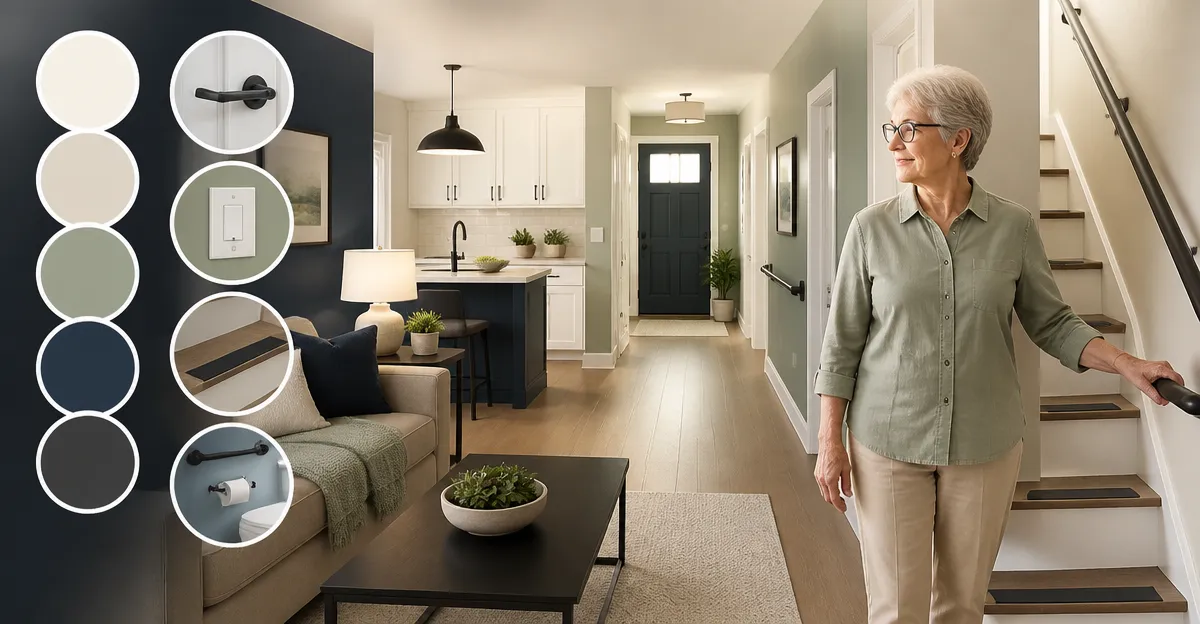
This guide explains how color contrast, lighting, and thoughtful product selection can create a safer, more navigable environment for seniors with low vision. Readers will learn foundational concepts, practical room‑by‑room strategies, and how to choose accessories that reinforce visual cues without compromising style.
Low‑vision seniors often rely on differences in hue, brightness, and texture to identify hazards, locate essential fixtures, and maintain independence. By applying evidence‑based design principles, families and caregivers can reduce the risk of trips, falls, and anxiety associated with ambiguous spaces.
The sections that follow provide a step‑by‑step roadmap, from understanding visual perception to implementing color‑coded pathways, selecting assistive hardware, and maintaining the modifications over time.
Throughout the guide, product recommendations are highlighted where they add measurable safety value, with direct links to reputable Amazon listings.
Background and Context
Age‑related ocular changes such as cataracts, macular degeneration, and glaucoma diminish contrast sensitivity and depth perception. The human eye processes luminance contrast more readily than chromatic contrast, yet a well‑chosen color palette can amplify the perception of edges and surfaces.
Research indicates that a contrast ratio of at least 3:1 between adjacent surfaces is necessary for reliable detection by most low‑vision individuals. Bright, matte finishes on handrails, doorway frames, and floor transitions are especially effective.
In addition to color, proper illumination reduces glare and shadows that can mask hazards. Ambient lighting should be evenly distributed, while task lighting should be positioned to avoid direct glare into the eyes.
Finally, physical aids such as grab bars, non‑slip mats, and tactile markers provide tactile reinforcement of visual cues, creating a multimodal safety net.
Key Strategies for Whole‑Home Color Contrast
Implementing contrast does not require a complete redesign. The following categories outline low‑cost, high‑impact modifications.
1. Doorways and Entryways
- Paint door frames a shade lighter or darker than adjoining walls; a dark navy frame against a light‑gray wall creates a clear visual boundary.
- Apply a contrasting paint strip (2‑inch wide) around the interior edge of each door to signal the threshold.
- Install a high‑contrast door pull (e.g., a brushed‑nickel handle) that stands out against the door surface.
2. Staircases and Ramps
- Use a contrasting nosing on each step; a matte white nosing on a dark‑stained stair tread improves edge detection.
- Apply anti‑slip tape with a bright hue (yellow or orange) on the first and last steps for added warning.
- Integrate a handrail painted a color that differs by at least three shades from the wall.
3. Bathroom Surfaces
- Choose a bathtub or shower wall tile in a light tone and pair it with a darker grout line to delineate boundaries.
- Install contrasting grab bars; for example, a grey‑finished bar against a white tile creates a visible safety cue.
- Place a non‑slip mat with a bold pattern near the tub edge to signal a change in surface texture.
4. Kitchen Counters and Appliances
- Apply contrasting countertop edge strips where the counter meets the backsplash.
- Use brightly colored knobs and handles on cabinets to differentiate storage areas.
- Position a contrasting cutting‑board or mixing bowl on the work surface to serve as a visual anchor.
Each of these interventions can be implemented independently, allowing families to prioritize based on budget and urgency.
Lighting Recommendations for Low‑Vision Seniors
Lighting works synergistically with color contrast. The following principles ensure illumination supports visual discrimination.
- Layered Lighting: Combine ambient ceiling fixtures with task lighting at workstations and accent lighting to highlight pathways.
- Glare Reduction: Use matte finishes on light fixtures and position lamps so that direct light does not shine into the eyes.
- Color Temperature: A neutral white (4000‑4500 K) provides balanced illumination without distorting color perception.
- Night‑time Visibility: Install low‑level night lights with a warm hue along hallways and bathroom doors to aid orientation without disrupting sleep.
Smart lighting controls can automatically adjust brightness based on time of day, further reducing the need for manual intervention.
Product Recommendations for Enhanced Safety
While color and light address visual perception, physical supports give seniors confidence when navigating slippery or elevated surfaces. The following products have been selected for their high ratings, durability, and ease of installation.
Bathroom Grab Bars
Grab bars provide a reliable tactile anchor that complements visual contrast. The table below lists four top‑rated options, each offering distinct installation methods and load capacities.
| Product | Installation Type | Load Capacity | Rating | Price (USD) |
|---|---|---|---|---|
| TAILI Suction Shower Grab Bars | Suction‑cup (no‑drill) | 240 lb each | 4.2/5 (14,191 reviews) | 33.99 |
| Ravinte 16‑Inch Shower Grab Bars | Screw‑mounted (studs recommended) | Not specified, stainless steel construction | 4.6/5 (2,897 reviews) | 19.99 |
| JUBOMT ADA Grab Bar Set | Stud‑mounted with concealed screws | 600 lb each | 4.5/5 (76 reviews) | 79.99 |
| Gotega 16‑Inch Shower Grab Bars | Screw‑mounted (concealed) | 500 lb | 4.4/5 (3,484 reviews) | 19.99 |
| Moen 24‑Inch Bathroom Grab Bar | SecureMount stud‑mount (hardware sold separately) | 500 lb | 4.8/5 (6,066 reviews) | 27.29 |
Each bar incorporates anti‑slip surfaces and corrosion‑resistant finishes, ensuring long‑term reliability in wet environments.
For seniors who cannot drill into walls, the TAILI Suction Shower Grab Bars provide a removable solution that adheres to smooth, non‑porous tiles. The product’s dual suction cups with locking latches support up to 240 lb per bar and feature an anti‑slip strip on top.
When a permanent installation is acceptable, the JUBOMT ADA Grab Bar Set delivers the highest load capacity (600 lb) and complies with ADA and ANSI standards, making it suitable for both residential and commercial settings.
Homeowners seeking a balance of affordability and durability may consider the Ravinte 16‑Inch Shower Grab Bars. Their knurled, non‑slip texture remains effective when wet, and the polished nickel finish adds a subtle aesthetic touch.
The Gotega 16‑Inch Shower Grab Bars feature a stainless‑steel construction with a concealed screw design, preserving the visual cleanliness of the bathroom while offering a 500 lb load rating.
Finally, the Moen 24‑Inch Bathroom Grab Bar combines a sleek brushed finish with ADA compliance, and its SecureMount system allows installation at any angle, making it versatile for bathtubs, showers, and even toilet backs.
Comparison and Selection Guide
Choosing the appropriate grab bar depends on three primary factors: installation feasibility, required load capacity, and aesthetic preference.
| Criteria | Best for Rental or Temporary Use | Best for Permanent, High‑Load Needs | Best for Style‑Focused Renovations |
|---|---|---|---|
| Installation | TAILI Suction Shower Grab Bars – no drilling required | JUBOMT ADA Grab Bar Set – stud‑mounted with concealed hardware | Moen 24‑Inch Bathroom Grab Bar – SecureMount with polished finish |
| Load Capacity | 240 lb per bar | 600 lb per bar | 500 lb per bar |
| Price Range | $33.99 | $79.99 | $27.29 (hardware sold separately) |
| Design Aesthetic | Grey suction cups blend with neutral tiles | Brushed stainless steel with concealed flanges | Lightly brushed warm‑gray metallic finish |
Families with limited drilling permissions should start with the suction‑cup option, while institutions that must meet ADA compliance should select the JUBOMT set.
Best Practices & Practical Tips
- Apply a contrasting paint strip at the base of each stair and at bathtub thresholds to create a visual cue that is visible from a distance.
- Use matte, non‑reflective finishes on walls and floors to reduce glare that can mask contrast.
- Install motion‑activated night lights in hallways; a soft amber glow preserves night‑time orientation without disrupting circadian rhythms.
- Periodically test suction‑cup grab bars by pulling firmly; if the bar shifts, clean the surface and re‑position according to the manufacturer’s instructions.
- When screwing bars into studs, pre‑drill pilot holes to avoid splitting the wood and ensure a secure anchor.
- Combine visual contrast with tactile cues, such as rubberized floor mats, to reinforce safety for users who rely on touch as well as sight.
Frequently Asked Questions
- Can suction‑cup grab bars be used on painted walls? The suction cups require a smooth, non‑porous surface such as tile, glass, or acrylic. Painted drywall is porous and will not hold the suction reliably.
- How often should grab bars be inspected? Seniors should check the stability of each bar monthly. Look for any movement, corrosion, or loosening of screws, and tighten or replace as needed.
- Do I need a professional to install stud‑mounted bars? While a competent DIYer can install bars with a stud finder and drill, a professional ensures that the bars are anchored into load‑bearing studs, which is essential for high‑capacity products such as the JUBOMT ADA set.
- What contrast ratio is recommended for floor‑to‑wall transitions? A minimum 3:1 luminance contrast is advisable. Light‑colored flooring paired with a darker wall baseboard, or vice versa, meets this guideline.
- Are there any health concerns with metal grab bars? High‑quality stainless steel, as used in the Ravinte, Gotega, and Moen products, is corrosion‑resistant and hypoallergenic. Regular cleaning with mild soap prevents buildup.
- Can I use the same grab bar in multiple rooms? Yes, provided the installation method is compatible with each surface. The TAILI suction‑cup bars are portable, while screw‑mounted bars can be relocated if the original mounting hardware is removed and the wall is repaired.
- How does color contrast affect night‑time safety? Darker floor mats against a light‑colored floor create a visible boundary that can be illuminated by low‑level night lights, guiding the senior safely to the bathroom after dark.
Conclusion
By integrating purposeful color contrast, layered lighting, and reliable safety hardware, families can dramatically improve the autonomy of low‑vision seniors. The strategies outlined in this guide are grounded in research and supported by high‑rating products that meet durability and accessibility standards.
Implementing these measures requires an initial assessment of each room, followed by incremental upgrades that respect budget constraints and aesthetic preferences. Over time, the combined visual and tactile cues create an environment where seniors feel confident moving independently, thereby enhancing overall quality of life.
Adopting a whole‑home approach ensures that safety is not isolated to a single bathroom or staircase but becomes a seamless experience throughout the living space.
Products Featured in This Guide
TAILI Suction Shower Grab Bars
Price: $33.99 | Rating: 4.2/5 (14,191 reviews)
Featured for its no‑drill installation, anti‑slip strip, and 240 lb load capacity, making it ideal for renters and temporary setups.
Ravinte 16‑Inch Shower Grab Bars
Price: $19.99 | Rating: 4.6/5 (2,897 reviews)
Featured for its polished nickel finish, knurled non‑slip surface, and versatile length options, providing an elegant yet functional solution.
JUBOMT ADA Grab Bar Set
Price: $79.99 | Rating: 4.5/5 (76 reviews)
Featured for its 600 lb capacity, ADA compliance, and concealed mounting hardware, suitable for both residential upgrades and commercial compliance.
Gotega 16‑Inch Shower Grab Bars
Price: $19.99 | Rating: 4.4/5 (3,484 reviews)
Featured for its stainless‑steel construction, 500 lb load rating, and concealed screw design that preserves bathroom aesthetics.
Moen 24‑Inch Bathroom Grab Bar
Price: $27.29 | Rating: 4.8/5 (6,066 reviews)
Featured for its sleek brushed finish, ADA compliance, and SecureMount system that allows flexible placement on any angle.