How to Choose the Right Bath Transfer Bench Size for Elderly: Step-by-Step Guide to Measurements & Safety
Choosing a bath transfer bench that fits both the bathtub and the user is essential for maintaining independence and preventing injury among older adults. This guide explains how to measure a tub, evaluate weight capacity, and select a bench that provides stability, comfort, and safety. Readers will learn practical techniques, common pitfalls, and product recommendations that simplify the decision‑making process. By following the steps, one can ensure that the chosen bench supports daily hygiene without compromising confidence.
The information presented is based on real‑world product specifications, customer feedback, and ergonomic principles. It is written for caregivers, family members, and seniors who are comfortable with basic tools but may need guidance on proper sizing. The guide remains valuable even if no purchase is made, because it emphasizes measurement accuracy and safety considerations above brand loyalty.
What You’ll Need
- A flexible steel measuring tape (minimum 60 inches)
- A level or plumb line to verify bench stability
- Pen and paper for recording dimensions
- Optional: Pepe Bathtub Transfer Bench for immediate testing of fit
Step 1 – Measure the Internal Width of the Tub
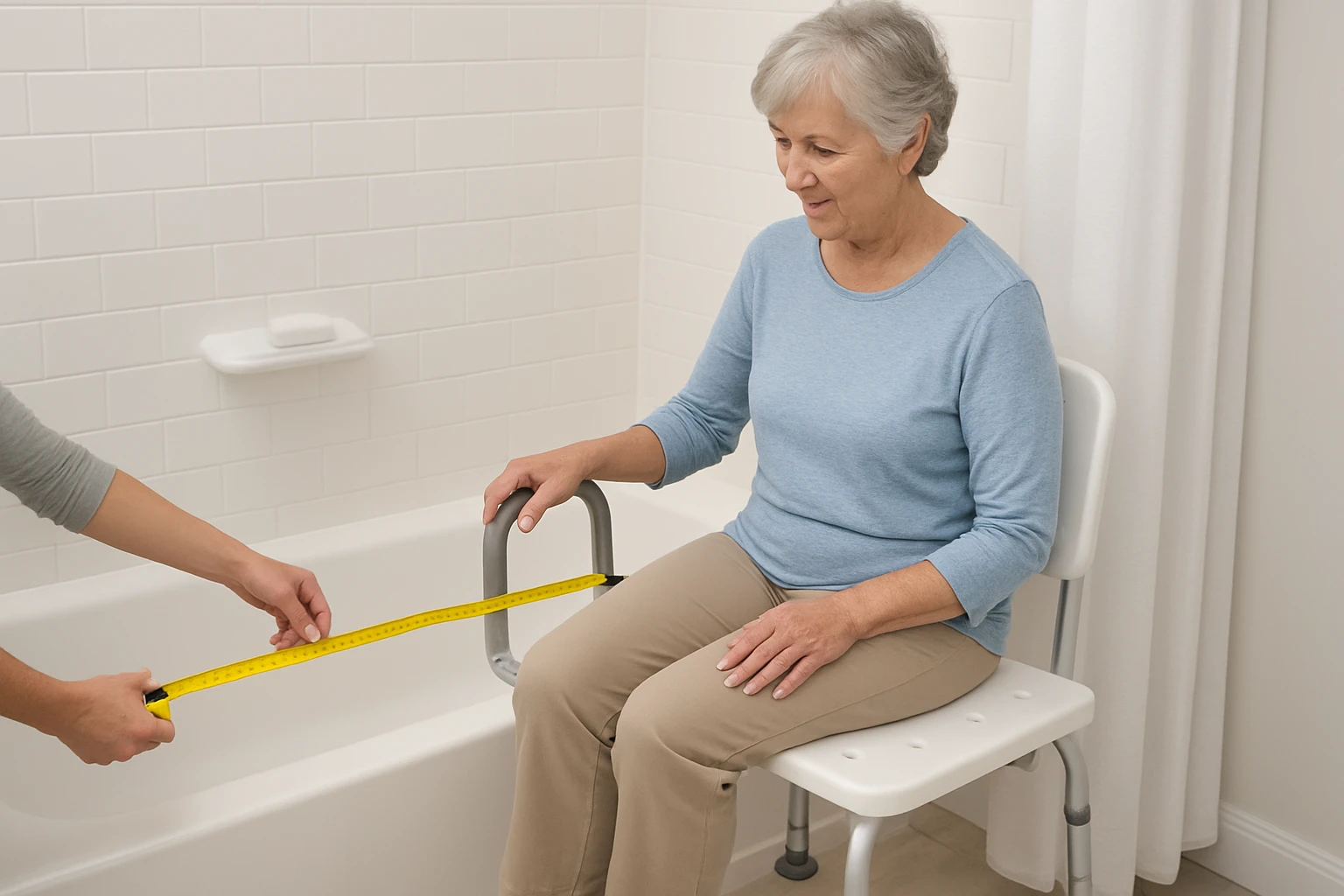
The first measurement determines whether a standard bench will fit without modification. Place the tape measure on the inner wall of the tub, extending it across the widest point at the top rim. Record the distance in inches; most conventional tubs range from 15.5 inches to 24.5 inches. If the width falls within this range, a standard‑size bench such as the Pepe Bathtub Transfer Bench will be compatible.
The Pepe bench is constructed from polypropylene, offering a lightweight (5.5 lb) yet sturdy platform with four adjustable, non‑slip legs. It supports up to 242 lb and includes drainage holes to prevent water pooling. Priced at $49.99 with a rating of 4.1 out of 5 stars from 611 reviews, it provides an affordable entry point for standard tubs. Its compact design allows easy removal after use, preserving bathroom space.
Step 2 – Determine the Required Length and Depth
Measure the length of the tub from the back wall to the front edge, noting any curvatures or built‑in ledges. A bench should not extend beyond the tub’s interior, as overhang can create a tripping hazard. For tubs longer than 60 inches, consider a longer model such as the Medline Bariatric Transfer Bench. This bench offers a 500 lb capacity and a reversible backrest, making it suitable for larger or deeper tubs.
The Medline bench features a lightweight aluminum frame, suction‑cup feet for added grip, and an adjustable height range of 16‑20 inches. At $73.99 and a rating of 4.4 out of 5 stars from 122 reviews, it balances durability with ease of assembly. Its side arm provides additional stability for users with limited balance, and the high weight capacity accommodates larger individuals.
Step 3 – Evaluate Height Compatibility and User Comfort
Ideal bench height aligns with the user’s seated hip level, typically 17‑19 inches for most seniors. Measure from the tub floor to the user’s hip while standing, then select a bench with an adjustable height range that includes this value. The Moen Adjustable Tub Transfer Bench offers height adjustments from 16.5 inches to 21 inches, allowing fine‑tuning for comfort.
Moen’s bench supports up to 400 lb, features a non‑slip surface with built‑in drainage, and includes a sturdy handle for secure transfers. Priced at $128.85 with a 4.5 star rating from 2,701 reviews, it represents a premium option for users who value long‑term durability and aesthetic integration with bathroom décor. The adjustable legs use push‑button mechanisms, simplifying height changes without tools.
Step 4 – Consider Swivel Functionality for Tight Spaces
In bathrooms where space is limited, a swivel seat can reduce the bench’s footprint while still providing easy access. The swivel mechanism allows the seat to rotate toward the user, minimizing the need to step over the bench. For such scenarios, the Platinum Health Swivel Shower Chair is an excellent choice.
This chair incorporates padded armrests, a high‑contrast blue finish for visual safety, and an optional leg‑extension kit for tubs with high ledges. It is used in hospitals and nursing homes, reflecting its professional‑grade construction. Although the price is not listed, the product is marketed for its premium comfort and safety, making it suitable for users who require additional leverage and a compact design.
Step 5 – Verify Stability and Safety Features
After selecting a bench, place it in the tub and test each leg for firm contact with the tub floor. Use a level to confirm that the seat is horizontal; any tilt can increase the risk of slipping. Ensure that non‑slip pads or suction cups are engaged, especially on smooth surfaces. Finally, check that the bench’s weight capacity exceeds the user’s weight by at least 25 percent to provide a safety margin.
All four recommended products incorporate safety features such as non‑slip legs, sturdy handles, and weight‑capacity ratings. The Pepe bench’s adjustable legs, Medline’s suction feet, Moen’s silicone‑tipped legs, and Platinum Health’s padded armrests each address a specific stability concern. Selecting a bench that matches the tub dimensions and user needs will reduce the likelihood of falls and enhance confidence during bathing.
Tips & Pro Tips
- Measure twice and record all dimensions before purchasing; a small error can render a bench unusable.
- For users with limited upper‑trunk strength, prioritize benches with sturdy handrails or padded armrests.
- When installing a bench in a tub with a sloping back wall, position the legs slightly higher on the slope to maintain level seating.
- Consider adding a non‑slip bath mat beneath the bench for extra security, especially on glossy acrylic tubs.
- Regularly inspect the bench for wear on legs, pads, and screws; replace any damaged components promptly.
Troubleshooting
Bench wobbles after placement: Verify that each leg is fully extended and that the suction cups are clean and pressed firmly against the tub surface. If wobble persists, use a small piece of rubber padding under the legs.
Seat does not fit the tub width: Re‑measure the inner width to confirm accuracy. If the tub is narrower than the bench’s minimum width, consider a custom‑fit solution or a narrower model such as a simple shower stool.
Conclusion
Accurately measuring tub dimensions, evaluating user weight, and selecting a bench with appropriate height and safety features are the cornerstones of a safe bathing environment for seniors. By following the five steps outlined above, one can confidently choose a bench that aligns with the tub’s geometry and the user’s physical abilities. The recommended products illustrate how specific design elements—adjustable legs, swivel seats, high weight capacities, and non‑slip features—address common challenges.
Implementing these practices will reduce the risk of falls, promote independence, and enhance overall quality of life for elderly individuals. Remember to reassess the bench periodically, especially after changes in health status, to ensure continued suitability.
Products Mentioned in This Guide
Platinum Health Swivel Shower Chair
Price: Not listed | Rating: Not listed (professional‑grade product used in hospitals)
Frequently Asked Questions
How do I accurately measure my bathtub for a transfer bench?
Use a flexible steel measuring tape to record the tub’s length, width, and depth, then compare those dimensions to the bench specifications.
What weight capacity should I look for in a transfer bench for an elderly user?
Choose a bench rated at least 25‑30 % higher than the user’s weight to ensure a safety margin.
Why is bench width important for safety?
A bench that matches the tub’s width provides proper support and prevents the user from slipping off the sides.
How can I verify that the transfer bench will be stable on my tub?
Place a level or plumb line on the bench after positioning it to confirm it sits evenly without rocking.
What common mistakes should I avoid when selecting a bath transfer bench?
Don’t ignore the tub’s shape, overlook weight limits, or select a bench that’s too short or too long for the tub’s dimensions.