The Ultimate Guide to Safe Medication Disposal for Seniors: Step‑by‑Step Options, Take‑Back Programs, and At‑Home Tips
Introduction
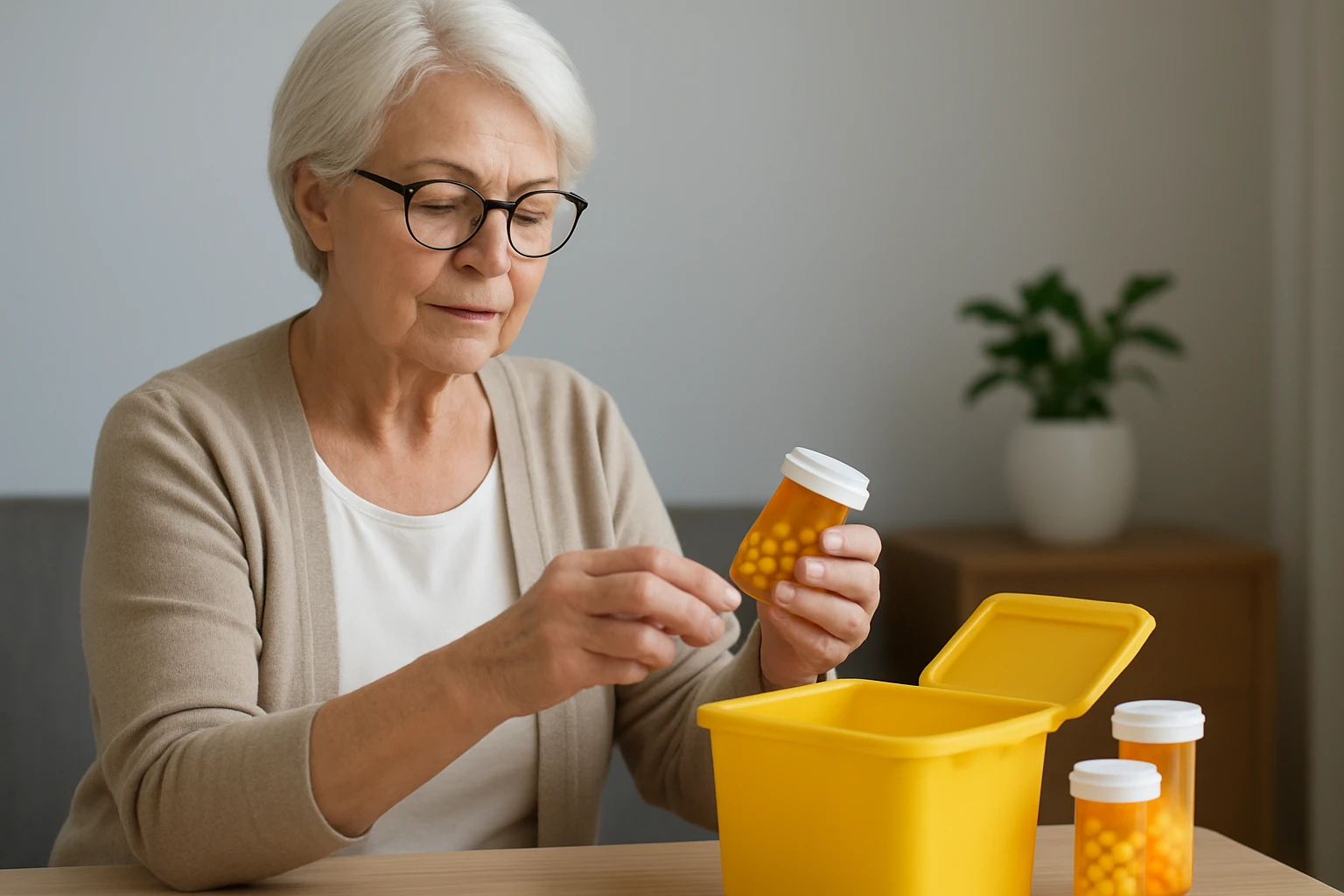
Seniors often accumulate prescription bottles, over‑the‑counter tablets, and supplements that are no longer needed. Improper disposal can lead to accidental poisoning, environmental contamination, and medication misuse. This guide explains why safe disposal matters, outlines federal and state requirements, describes community take‑back options, and presents reliable at‑home solutions. Readers will learn practical steps, compare popular disposal products, and receive actionable tips to protect family members and the planet.
By the end of this article, seniors will understand how to identify expired or unused drugs, where to locate authorized collection sites, and which at‑home disposal system best fits their lifestyle.
Background and Context
Medication waste is a public‑health concern because unused pills can be diverted for non‑medical use or enter waterways when flushed. The U.S. Environmental Protection Agency (EPA) recommends that households avoid flushing drugs unless the label explicitly permits it. Instead, the Drug Enforcement Administration (DEA) and the Food and Drug Administration (FDA) endorse take‑back programs and EPA‑approved disposal methods.
For seniors, the challenge is twofold: many prescriptions are refilled regularly, and physical limitations may make traveling to a collection site difficult. Understanding the chemistry behind disposal products also helps seniors choose a method that neutralizes drugs without hazardous residues.
Key terms include "DEA‑controlled substances" (drugs with potential for abuse) and "non‑controlled substances" (common pain relievers, antihistamines, etc.). Both categories require safe handling, but the legal obligations differ slightly. This guide treats all medications with equal caution.
Understanding Medication Waste
Medication waste can be categorized into three groups:
- Expired prescriptions – drugs that have passed their labeled expiration date.
- Unfinished courses – partial bottles remaining after a short‑term treatment.
- Unnecessary duplicates – multiple prescriptions for the same condition.
Each group presents a risk if stored in a kitchen cabinet or bathroom drawer. The risk includes accidental ingestion by children, pets, or cognitively impaired adults, as well as intentional misuse. Seniors should conduct a quarterly inventory, discarding any medication that is no longer needed.
Federal and State Guidelines
The DEA mandates that pharmacies and law‑enforcement agencies host periodic take‑back events. Many states also require retailers to accept unused medications for safe disposal. Seniors should check their state health department website for specific regulations. When a take‑back event is unavailable, the FDA recommends using EPA‑registered disposal products that chemically neutralize drugs.
It is important to note that flushing medication down the toilet is only acceptable for a small list of life‑saving drugs, such as certain opioids, when no alternative exists. Otherwise, the recommended approach is to use a certified disposal system.
Community Take‑Back Programs
Take‑back programs provide a convenient, no‑cost option for seniors who can travel to a collection site. These programs are typically offered by:
- Local pharmacies – many chain stores host permanent drop‑off boxes.
- Law‑enforcement agencies – periodic "National Prescription Drug Take‑Back Day" events.
- Hospitals and senior centers – often partner with local health departments.
When using a take‑back box, seniors should remove personal information from prescription labels to protect privacy. The box will be sealed and later transported to a licensed disposal facility where the medication is incinerated under controlled conditions.
For seniors with limited mobility, many communities now offer curbside pick‑up services. Contact the local health department to inquire about eligibility and scheduling.
At‑Home Disposal Options
When a take‑back site is not readily accessible, an at‑home disposal product can safely deactivate medication. Two highly rated products are highlighted below.
The first option is the Pill Thing RX Medication Disposal Set. This system uses a proprietary blend of bentonite clay and a sodium polymer to absorb and neutralize up to 500 pills in a 500 cc bottle. The set includes a blue fill line, an orange water line, and a secure lid that, when shaken for ten seconds, initiates a chemical reaction that transforms pills into a non‑hazardous gel. The product holds 40 % more capacity than competing brands, is rated 4.8 out of 5 stars by 70 reviewers, and costs $21.97 for a two‑pack.
The second option is the Rx Destroyer Medication Disposal Bottle. This 16‑oz bottle contains a pre‑measured digestion solution that works on pills, capsules, liquids, lozenges, patches, and even suppositories. After loading medication, the user agitates the bottle to mix the solution, which solidifies the contents into a safe waste form. The product is EPA‑registered, HSA/FSA eligible, and carries a 4.7‑star rating from 129 reviews. It is priced at $15.90.
Both products meet federal and state disposal guidelines, avoid flushing, and provide a simple, non‑toxic method for seniors to manage medication waste at home.
Comparison and Selection Guide
| Feature | Pill Thing RX Medication Disposal Set | Rx Destroyer Medication Disposal Bottle |
|---|---|---|
| Capacity | 500 cc (up to 500 pills) | 16 oz (approximately 450 pills, plus liquids) |
| Key Chemical Process | Bentonite clay absorption with sodium polymer | Pre‑filled chemical digestion solution |
| Steps Required | 4 steps – fill to blue line, add warm water to orange line, seal tightly, shake 10 seconds | 4 steps – load medication, add funnel, agitate, store until full |
| Price (per unit) | $21.97 for 2‑pack | $15.90 for single bottle |
| Customer Rating | 4.8/5 (70 reviews) | 4.7/5 (129 reviews) |
| Environmental Claim | Reduces waste by 40 % more capacity | Eco‑friendly, reduces ecological footprint |
| Eligibility for Health‑Savings Accounts | No | Yes (HSA/FSA eligible) |
For seniors who prefer a larger single‑use container and value HSA/FSA eligibility, the Rx Destroyer may be the better choice. Seniors who need a higher pill capacity and appreciate a two‑pack for backup might select the Pill Thing set.
Best Practices & Tips for Seniors
- Maintain a medication log: record the name, dosage, and expiration date of each prescription.
- Store medicines in a locked cabinet: this reduces the risk of accidental ingestion or intentional misuse.
- Separate controlled substances: keep them in a distinct container and dispose of them promptly.
- Use the four‑step process consistently: follow the product instructions exactly to ensure complete deactivation.
- Do not crush pills before disposal unless the product specifically requires it; crushing can release hazardous dust.
- Recycle the empty container if the manufacturer indicates it is recyclable after the gel has solidified.
When traveling, seniors can carry a small, pre‑filled disposal bottle to safely neutralize medication on the road. This is especially useful for those attending family gatherings where leftover prescriptions are common.
Frequently Asked Questions
1. Can I flush any medication down the toilet?
Only a limited list of life‑saving drugs, such as certain opioids, may be flushed when no other disposal method is available. All other medications should be taken to a take‑back program or processed with an EPA‑registered disposal product.
2. How often should seniors review their medication cabinets?
A quarterly review is recommended. During each review, seniors should discard any medication that is expired, no longer needed, or has changed dosage.
3. Are the disposal products safe for pets?
Yes. Both the Pill Thing and Rx Destroyer systems transform pills into a non‑toxic gel that cannot be ingested by animals. However, seniors should still keep the containers out of reach of curious pets.
4. What should I do with the solidified gel after using a disposal system?
Once the gel has hardened, it can be placed in a regular household trash bag. The gel is non‑hazardous and will not leach chemicals in a landfill.
5. Do take‑back programs accept over‑the‑counter (OTC) medications?
Most programs accept both prescription and OTC drugs, provided they are in their original containers. Seniors should verify with the specific drop‑off location.
6. Is there a cost associated with community take‑back events?
No. Take‑back events are typically free of charge and funded by government or nonprofit agencies.
7. Can I reuse the disposal bottle after it is empty?
Both products are designed for single‑use cycles. After the gel has solidified and been discarded, the container should be recycled if the manufacturer permits it.
Conclusion
Safe medication disposal protects seniors, families, and the environment. By understanding federal guidelines, leveraging community take‑back programs, and selecting an appropriate at‑home disposal system, seniors can confidently manage medication waste. The Pill Thing RX Medication Disposal Set and Rx Destroyer Medication Disposal Bottle both meet EPA standards and offer user‑friendly processes. Implementing the best‑practice tips in this guide will reduce the risk of accidental poisoning, curb drug misuse, and promote ecological stewardship.
Products Featured in This Guide
Pill Thing RX Medication Disposal Set
Price: $21.97 | Rating: 4.8/5 (70 reviews)
Why featured: Provides 40 % more capacity than competing products, uses bentonite clay to neutralize up to 500 pills, and offers a two‑pack for added convenience.
Rx Destroyer Medication Disposal Bottle
Price: $15.90 | Rating: 4.7/5 (129 reviews)
Why featured: EPA‑registered, works on a wide range of medication forms, is HSA/FSA eligible, and offers an eco‑friendly solution for seniors seeking a single‑use bottle.