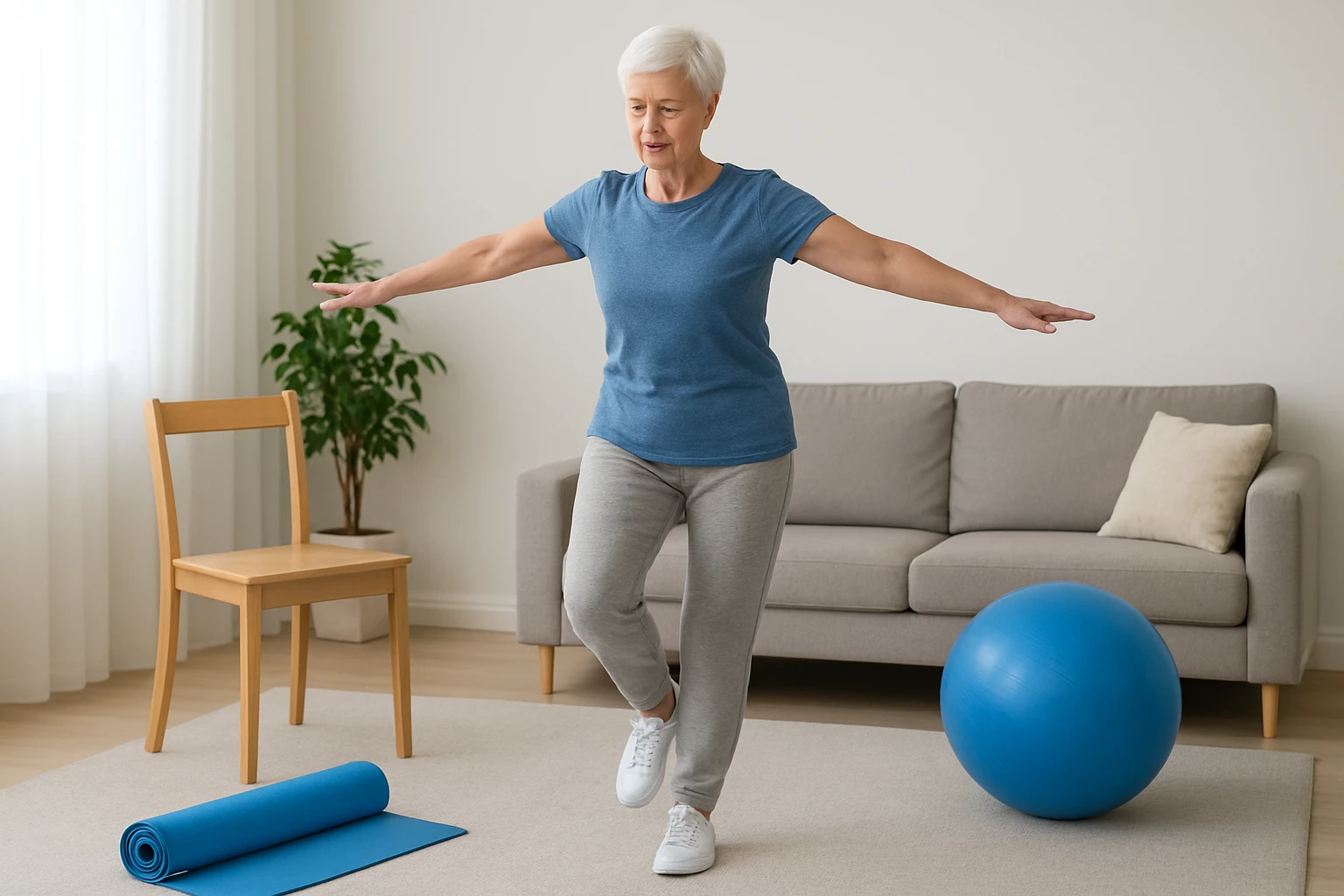
How to Do Home Balance Exercises for Seniors to Reduce Fall Risk: 8 Easy, Safe Moves
Introduction
Maintaining balance is essential for seniors who wish to preserve independence and avoid injuries caused by falls. This guide will teach eight simple, low‑impact exercises that can be performed at home with minimal equipment. Each movement focuses on strengthening the muscles that support posture, improving proprioception, and enhancing coordination. By following the instructions consistently, one can expect measurable improvements in stability and confidence.
The exercises have been selected based on clinical recommendations for older adults and are suitable for individuals with limited mobility. Safety considerations are woven into every step, and optional tools such as a balance pad are introduced to increase challenge without compromising security. One should consult a healthcare professional before beginning any new fitness routine, especially if chronic conditions exist.
What You’ll Need
- A sturdy chair without wheels for support during seated exercises.
- A non‑slippery floor surface or a yoga mat.
- Optional: 5BILLION Foam Balance Pad – a lightweight, textured pad that creates an unstable surface to engage core muscles.
- Comfortable clothing that allows free movement.
- A water bottle for hydration.
Step 1: Heel‑to‑Toe Walk
Begin by standing near a countertop or sturdy chair for balance assistance. Place one foot directly in front of the other, heel touching the toe of the opposite foot, and walk forward ten steps. Keep the spine upright, engage the abdominal muscles, and focus on a fixed point ahead to maintain equilibrium. This exercise trains the ankle dorsiflexors and improves gait stability, which are critical for preventing trips.
If balance feels uncertain, place the 5BILLION Foam Balance Pad on the floor and perform the walk along its edge. The pad’s non‑slip textured surface offers gentle instability, encouraging the foot muscles to activate more fully while the pad’s waterproof material ensures easy cleaning.
Step 2: Single‑Leg Stand
Stand behind a chair, grasp the backrest lightly, and lift one foot a few inches off the ground. Hold the position for five seconds, then lower the foot and repeat five times before switching legs. This movement strengthens the gluteus medius and calf muscles, both of which contribute to lateral stability.
For added challenge, perform the single‑leg stand on the 5BILLION Foam Balance Pad. The pad’s extra‑large size supports up to 300 pounds and its foam composition quickly regains shape after each repetition, making it ideal for repeated use.
Step 3: Side Leg Raise with Support
Stand beside the chair, hold the backrest, and slowly lift the outer leg to the side, keeping the torso upright. Raise the leg to a comfortable height, hold for two seconds, then lower it. Perform ten repetitions on each side. This exercise targets the hip abductors, which are essential for side‑to‑side movements and preventing falls when stepping onto uneven terrain.
Placing the 5BILLION Foam Balance Pad under the supporting foot introduces a subtle wobble, forcing the stabilizing muscles to work harder without risking loss of balance.
Step 4: Seated March
Sit on a sturdy chair with feet flat on the floor. Lift one knee toward the chest while keeping the back straight, then lower it and repeat with the opposite leg. Perform fifteen marches per leg. This seated movement improves hip flexor strength and promotes circulation without placing weight on the lower extremities.
While a balance pad is not required for this seated exercise, the pad can be used as a comfortable knee cushion if desired, thanks to its water‑proof and easy‑to‑clean surface.
Step 5: Standing Quad Stretch
Stand behind the chair, hold the backrest, and bend one knee, bringing the heel toward the buttocks. Grasp the ankle with the hand on the same side, gently pull to feel a stretch in the front thigh. Hold for 20 seconds, then switch legs. This stretch maintains quadriceps flexibility, which supports knee stability during walking.
Using the 5BILLION Foam Balance Pad as a standing mat reduces impact on the joints and provides a non‑slip surface, decreasing the risk of accidental slips while stretching.
Step 6: Heel Raises
Stand with feet hip‑width apart, hold the chair for balance, and slowly rise onto the balls of the feet. Hold the raised position for three seconds, then lower the heels back to the floor. Complete twelve repetitions. Heel raises strengthen the calf muscles and improve ankle stability, which are vital for navigating stairs.
Performing heel raises on the 5BILLION Foam Balance Pad adds a mild instability that further engages the ankle stabilizers, while the pad’s high‑density foam absorbs impact.
Step 7: Tai Chi Inspired Weight Shift
Stand with feet shoulder‑width apart, lightly touching the chair for reassurance. Shift weight slowly to the right foot, allowing the left foot to lift slightly off the ground, then return to center. Repeat the motion to the left side. Perform ten shifts per side, focusing on smooth, controlled movements and deep breathing. This exercise enhances proprioception and promotes mindful balance control.
Executing the weight shift on the 5BILLION Foam Balance Pad encourages the core muscles to activate automatically, because the pad’s destabilizing surface triggers reflexive adjustments.
Step 8: Gentle Yoga Tree Pose
Begin by standing tall, feet together, and place the sole of the right foot against the inner left calf or thigh (avoid the knee). Bring hands to the chest or overhead, depending on flexibility. Hold the pose for ten seconds, then switch sides. The tree pose improves single‑leg stability, ankle flexibility, and mental focus.
For seniors who require additional support, the 5BILLION Foam Balance Pad can be positioned under the supporting foot, providing a cushioned yet unstable platform that mimics a natural outdoor surface.
Tips & Pro Tips
- Begin each session with a brief warm‑up, such as marching in place for one minute, to increase blood flow to the muscles.
- Maintain a neutral spine throughout all exercises; avoid slouching, which can compromise balance.
- If dizziness occurs, pause immediately and sit down; hydration and a short rest often resolve the issue.
- Progress gradually: start with the basic version of each exercise and only add the balance pad once confidence is established.
- Record the number of repetitions and duration of each hold in a journal to track improvement over time.
Troubleshooting
Problem: The pad feels too unstable, causing fear of falling.
Solution: Perform the exercise on a firm surface first, then place the pad under the non‑supporting foot only, reducing wobble while still engaging stabilizers.
Problem: Knee pain during side leg raises.
Solution: Reduce the range of motion, keep the supporting foot flat on the floor, and ensure the pad is clean and free of debris that could cause uneven pressure.
Conclusion
By incorporating these eight exercises into a regular routine, seniors can significantly reduce the risk of falls and maintain functional independence. The combination of strength, flexibility, and proprioceptive training addresses the primary contributors to balance loss. Consistency, proper technique, and the optional use of the 5BILLION Foam Balance Pad will accelerate progress while ensuring safety.
One is encouraged to set realistic goals, such as completing the routine three times per week, and to celebrate incremental improvements. With dedication, the fear of falling can diminish, allowing a more active and fulfilling lifestyle.
Products Mentioned in This Guide
Frequently Asked Questions
What are the key benefits of doing balance exercises at home for seniors?
They improve stability, reduce fall risk, and help maintain independence by strengthening posture and coordination muscles.
How often should seniors perform the eight balance exercises?
Aim for 3‑4 sessions per week, completing each move for 30‑60 seconds with brief rest between sets.
Is any equipment required for these exercises?
A sturdy chair, a non‑slippery floor or yoga mat, and optionally a balance pad or light hand weights.
Can seniors modify the exercises if they have limited mobility?
Yes, they can reduce range of motion, use a chair for support, or perform seated versions while still gaining benefits.
Should seniors consult a healthcare professional before starting?
Absolutely; a doctor or physical therapist should approve the routine, especially if chronic conditions or recent injuries exist.