How to Choose and Use Safe Kitchen Knives: Simple Cutting Techniques for Seniors with Weak Grip
Introduction
One of the most rewarding activities in daily life is preparing a home‑cooked meal, yet many seniors find the act of cutting food to be a source of frustration and anxiety. This guide explains how to evaluate personal needs, select an adaptive knife, and apply safe cutting techniques that minimise strain on weakened hands. Readers will learn why ergonomically designed knives reduce effort, how to maintain a stable work surface, and which simple habits prevent accidental injury. By the end of the article, seniors and caregivers will possess a clear roadmap for confident, independent food preparation.
What You Will Need
- Cutting board with non‑slip base
- Adaptive kitchen knife (see recommendations below)
- Protective blade cover for storage
- Dishwashing liquid and soft cloth for cleaning
- Stable countertop or table at comfortable height
Step 1: Assess Grip Strength and Mobility
Before selecting any tool, it is essential to evaluate the user’s grip strength, range of motion, and any tremor patterns that may affect control. One practical method is to perform a simple squeeze test using a soft rubber ball; the user should aim for a firm yet comfortable grip without pain. If the user experiences difficulty maintaining a steady wrist, an adaptive knife with an angled handle will provide a mechanical advantage by allowing the forearm to apply downward force rather than relying on wrist articulation. For individuals with unilateral weakness, a one‑handed rocking motion reduces the need for bilateral coordination.
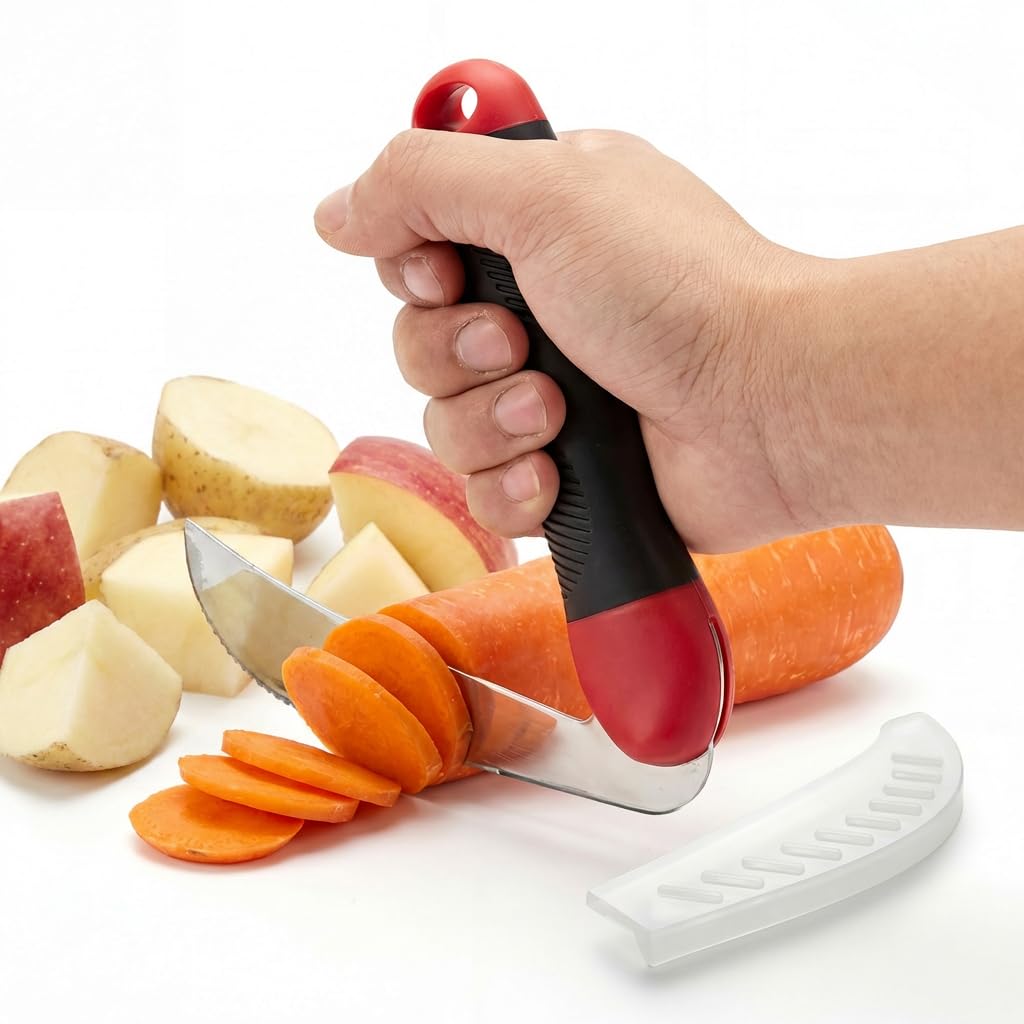
When the assessment indicates limited grip, the GreenAnts Ergonomic Kitchen Knife becomes a suitable choice because its tilted handle aligns with natural arm movement, thereby decreasing the effort required to slice. The product is priced at $18.72 and holds a rating of 3.9 out of 5 stars based on five reviews, indicating moderate satisfaction among early adopters. Its protective blade cover also enhances safety during storage, a critical feature for users with reduced dexterity.
Step 2: Choose the Appropriate Adaptive Knife
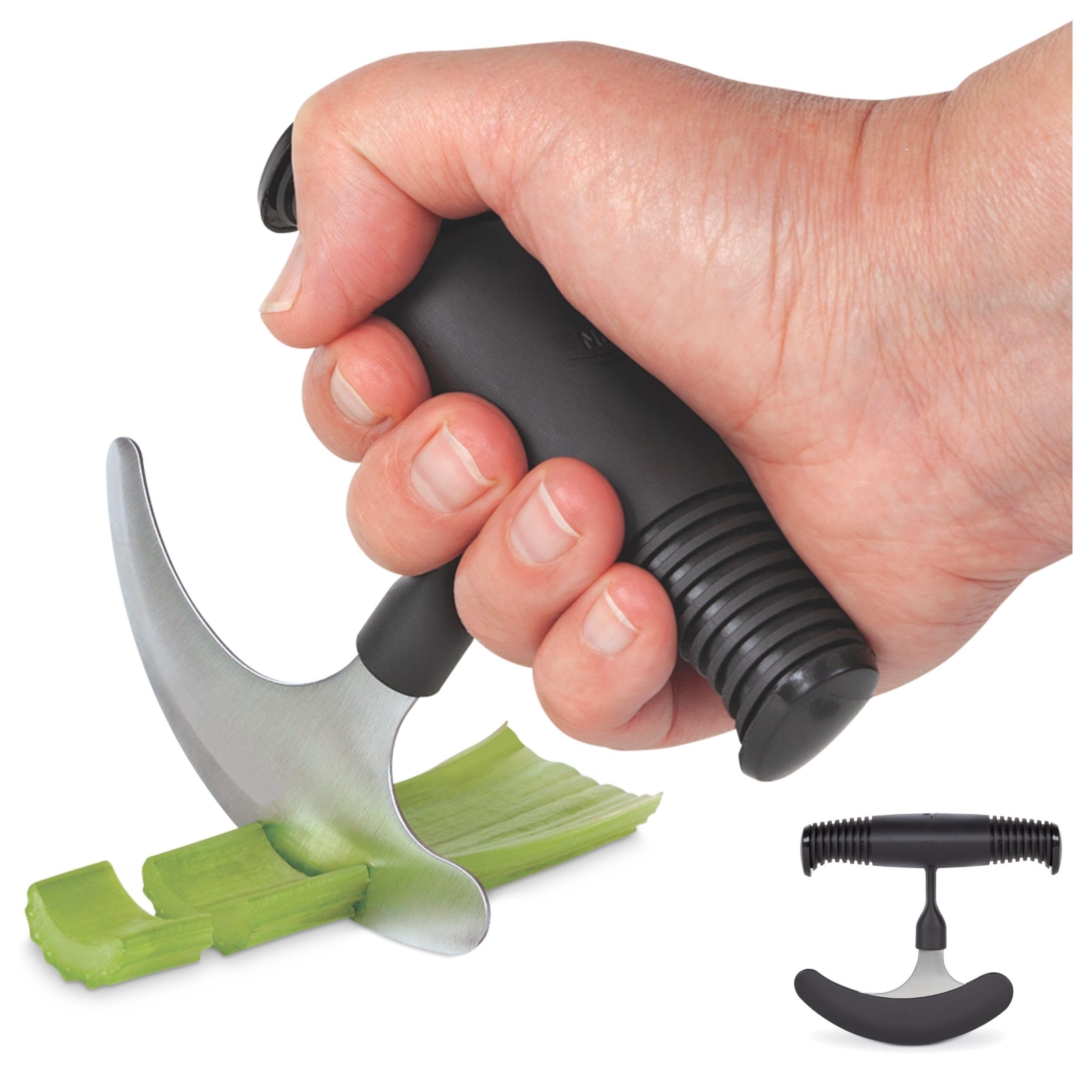
Two adaptive knives dominate the market for seniors with weak grip: the GreenAnts Ergonomic Kitchen Knife and the North Coast Big Grip Rocker Knife. The GreenAnts model features an angled ergonomic handle that encourages a natural rocking motion, while the North Coast version incorporates a T‑shaped non‑slip grip that accommodates a broader range of hand sizes. Both knives possess serrated blades capable of cutting soft vegetables, bread, and even pizza without excessive force.
The North Coast Big Grip Rocker Knife is priced at $19.95 and enjoys a higher rating of 4.9 out of 5 stars from ten reviews, reflecting strong approval for its non‑slip T‑grip and dishwasher‑safe stainless steel blade. Its blade measures 4.5 inches, can be sharpened with a standard sharpener, and includes a safety cover for secure storage. Users who prefer a broader grip surface or who experience frequent moisture on the handle may find the North Coast knife more comfortable.
When deciding between the two, consider the following criteria: hand size, preference for angled versus T‑shaped handle, and the importance of blade replaceability. Both products are designed for one‑handed operation, but the GreenAnts knife emphasizes a rocking motion that mimics a traditional chef’s knife, whereas the North Coast knife focuses on a firm, non‑slip grip that remains stable even when the hand is wet.
Step 3: Prepare a Stable Cutting Surface
A secure cutting board prevents the food from sliding, which in turn reduces the need for excessive grip strength. Choose a board with a rubberized underside or place a damp towel underneath to create friction. Position the board so that the user’s dominant hand can rest comfortably on the edge without overreaching; a board height of approximately 36 cm is ideal for most seated individuals.
If the user intends to cut items such as tomatoes or soft fruits, a board with a shallow groove can collect juices and keep the work area tidy. Ensure the board is clean and free of cracks, as damaged surfaces can harbor bacteria and cause the knife to slip unexpectedly.
Step 4: Apply Proper Cutting Technique
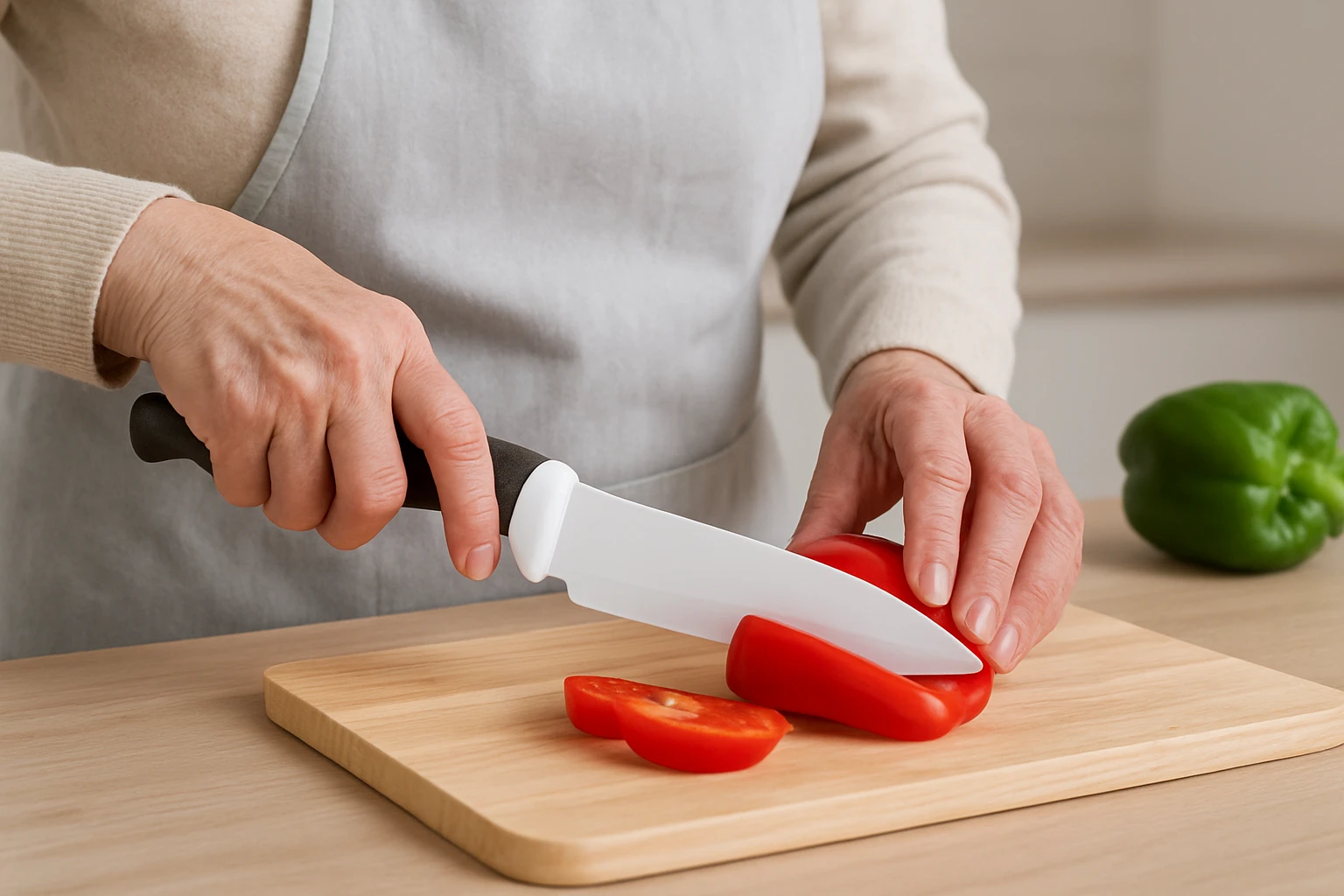
Begin by placing the food item flat on the board and securing it with the non‑cutting hand, using a gentle but firm pressure. With the adaptive knife in the dominant hand, align the blade edge with the intended cut line and engage the rocking motion: press down gently while allowing the blade to glide forward in a smooth arc. The angled handle of the GreenAnts knife naturally guides the wrist into a downward trajectory, reducing the need for a vertical chopping motion that can strain the forearm.
For the North Coast Big Grip Rocker Knife, the user should grip the T‑handle firmly, ensuring the thumb rests on the ribbed side for extra stability. The non‑slip material prevents the hand from sliding, even when moisture is present. Perform the cut in short, controlled strokes rather than a single long sweep; this approach maintains control and reduces the risk of the blade slipping off the food.
After each cut, pause to assess the position of the food and adjust the grip if necessary. Maintaining a relaxed posture, with shoulders down and elbows close to the body, further diminishes fatigue during prolonged cutting sessions.
Step 5: Clean, Maintain, and Store the Knife Safely
Immediately after use, rinse the blade under warm water to remove food particles, then wash with a mild detergent and a soft cloth. Both recommended knives are dishwasher safe, but hand‑washing preserves the blade edge longer and prevents accidental contact with other utensils. After cleaning, dry the blade thoroughly to avoid corrosion.
The protective blade cover supplied with each product should be slid onto the blade tip before storage. This cover shields the edge from accidental contact with other kitchen tools and protects the user’s hands when retrieving the knife from a drawer. Store the knife in a dedicated utensil compartment or a magnetic strip that keeps the handle upright, ensuring that the user can retrieve it without bending or stretching.
Periodically inspect the blade for signs of wear. The North Coast knife’s stainless steel blade can be sharpened with a conventional sharpening stone, while the GreenAnts serrated edge should be replaced if it becomes dull, as serrated blades are not easily resharpened.
Tips & Pro Tips
- Position the cutting board at waist height to minimise shoulder strain.
- Use a kitchen towel underneath the board to prevent slipping on polished countertops.
- When cutting round items such as apples, create a small flat base by trimming a thin slice from the bottom; this stabilises the fruit.
- For extra leverage, place a lightweight silicone mat under the board; the added friction reduces the need for a tight grip.
- Consider wearing cut‑resistant gloves during the initial learning phase to build confidence.
Troubleshooting
| Problem | Possible Cause | Solution |
|---|---|---|
| Knife slips during cutting | Board is wet or not properly secured | Dry the board, use a rubberized mat, or place a damp towel underneath. |
| Hand fatigues quickly | Grip is too tight or blade angle is incorrect | Relax the grip, ensure the handle is angled correctly, and use short rocking strokes. |
| Blade becomes dull | Repeated cutting of hard foods | Replace the serrated blade of the GreenAnts knife or sharpen the stainless steel blade of the North Coast knife. |
Conclusion
Choosing a safe kitchen knife for seniors with weak grip involves understanding personal limitations, selecting an ergonomic tool, and practising controlled cutting motions. By following the steps outlined above, one can transform a potentially hazardous task into an empowering activity that promotes independence. The adaptive knives highlighted in this guide—GreenAnts Ergonomic Kitchen Knife and North Coast Big Grip Rocker Knife—provide reliable solutions that address common challenges faced by seniors and individuals with limited hand strength.
Readers are encouraged to apply the techniques, maintain their tools diligently, and adapt the workspace to their comfort. With the right equipment and mindful practice, cooking can remain a safe, enjoyable, and socially enriching experience well into later years.
Products Mentioned in This Guide
Frequently Asked Questions
How can seniors assess their grip strength before buying a kitchen knife?
Measure how long they can hold a light object and test pinch strength with a dynamometer or simple household items to gauge the needed knife handle design.
What features make an adaptive kitchen knife safe for users with weak grip?
Ergonomic, wide, non‑slip handles, lightweight blades, and a curved edge that requires less pressure are key safety features.
Why is a non‑slip cutting board essential for seniors?
It prevents the board from moving while cutting, reducing strain and the risk of accidental cuts.
How should seniors store their knives to maintain safety?
Use a protective blade cover or a dedicated knife block to keep the edge protected and avoid accidental contact.
What is the best way to clean an adaptive kitchen knife without damaging it?
Wash gently with dishwashing liquid and a soft cloth, then dry immediately to keep the handle grip and blade in good condition.