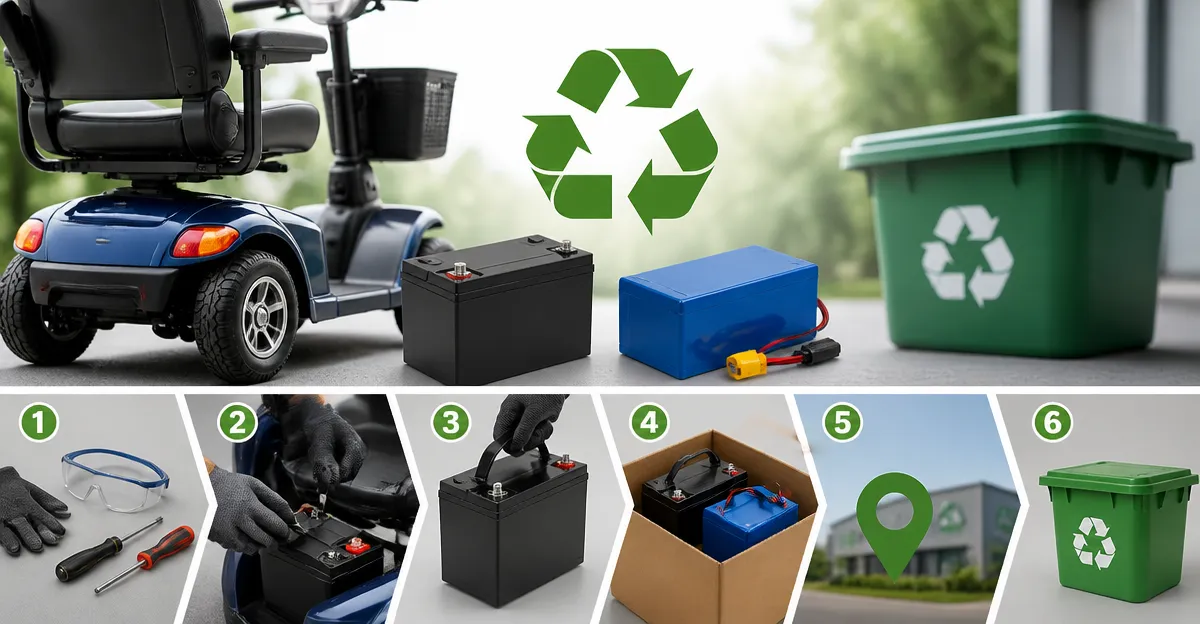
Introduction
This guide explains how to recycle mobility scooter batteries in a safe and environmentally responsible manner. It covers both lead‑acid and lithium‑ion chemistries, which are common in modern scooters. Readers will learn the required tools, the step‑by‑step procedure, and where to locate authorized recycling facilities. By following these instructions, one can protect personal safety, comply with regulations, and reduce hazardous waste.
What You’ll Need
- Protective gloves (chemical‑resistant)
- Safety goggles
- Non‑conductive insulated screwdriver set
- Battery terminal cleaning brush
- Leak‑proof container for lead‑acid electrolyte
- Dedicated charger for lithium‑ion batteries (if testing before disposal)
- Transportation box approved for hazardous materials
- Access to a local recycling center that accepts lead‑acid or lithium‑ion batteries
Optional tools that can streamline the process are listed in the step‑by‑step section. The following products are recommended because they are designed specifically for mobility scooter battery maintenance and replacement.
Step 1: Prepare a Safe Work Area
Choose a well‑ventilated space away from open flames, sparks, or sources of ignition. Lay a non‑conductive mat on the floor to prevent accidental short circuits. Put on chemical‑resistant gloves and safety goggles before handling any battery. Ensure that a fire extinguisher rated for electrical fires is within reach.
For lead‑acid batteries, a leak‑proof container is essential to capture any spilled electrolyte. For lithium‑ion batteries, a static‑dissipative mat reduces the risk of static discharge.
Step 2: Identify the Battery Type and Model
Examine the label on the battery to determine whether it is a sealed lead‑acid unit or a lithium‑ion pack. Lead‑acid batteries are typically heavier, have vent caps, and are labeled with "AGM" or "SLA." Lithium‑ion packs are lighter, have a rectangular shape, and often include a built‑in battery management system.
If the scooter uses a Pride battery pack, the Pride Battery Pack is a sealed lead‑acid solution that provides 18 AH capacity and fits Go‑Go Elite Traveller Plus and Go‑Go Sport models. This pack is fully charged and maintenance‑free, making it a reliable reference when verifying compatibility.
Step 3: Disconnect the Battery Safely
Turn off the scooter and remove the key to prevent accidental power activation. Using an insulated screwdriver, loosen the negative (black) terminal first, followed by the positive (red) terminal. Keep the terminals separated and do not allow them to touch each other or any conductive surface.
If the battery is a lithium‑ion unit such as the CWUU Lithium Battery, ensure that the scooter is powered down for at least five minutes before removal. This precaution allows the internal capacitors to discharge, reducing the risk of a short circuit.
Step 4: Inspect the Battery for Damage
Look for signs of swelling, corrosion, cracked casings, or leaking electrolyte. Swollen lithium‑ion cells indicate internal failure and must be handled as hazardous waste. Corroded terminals on lead‑acid batteries can be cleaned with a terminal brush, but severe damage may require professional disposal.
The CWUU Lithium Battery features built‑in over‑charge, over‑discharge, temperature, and short‑circuit protections, which reduce the likelihood of catastrophic failure. Nevertheless, visual inspection remains a critical safety step.
Step 5: Discharge the Battery (If Required)
Some jurisdictions require batteries to be fully discharged before recycling. For lead‑acid batteries, connect a resistive load (such as a headlamp) until the voltage drops below 10.5 V. For lithium‑ion packs, use the dedicated charger supplied with the CWUU Lithium Battery to perform a controlled discharge to the recommended safe voltage (typically around 3.0 V per cell).
Discharging minimizes the risk of fire during transport and complies with most recycling facility protocols.
Step 6: Package the Battery for Transport
Place the battery in an approved hazardous‑materials box. Seal the box with tamper‑evident tape and label it with "Used Lead‑Acid Battery" or "Used Lithium‑Ion Battery" as appropriate. Include a copy of the safety data sheet (SDS) if available.
When recycling a Drive Medical battery, the Drive Medical Battery Pack serves as a reference model for proper packaging dimensions. This pack arrives fully charged and fits the Phoenix HD 3 or 4 scooter, illustrating the size and weight of a typical 20 AH lead‑acid unit.
Step 7: Locate an Authorized Recycling Facility
Contact your local waste management authority or search online for a certified recycler that accepts lead‑acid or lithium‑ion batteries. Many automotive stores, hardware chains, and municipal hazardous‑waste centers provide drop‑off services.
When delivering the battery, present the packaging and any required documentation. Some facilities may charge a small fee for processing, which is offset by the environmental benefit of recovering lead, plastic, and lithium.
Tips & Pro Tips
- Always store used batteries in a cool, dry place away from direct sunlight.
- Label each battery with the date of removal to track storage duration.
- Consider using a battery terminal cleaning brush after removal to prevent corrosion on the scooter’s connectors.
- When handling lithium‑ion packs, avoid puncturing the casing, as this can release flammable electrolyte.
- Keep a spare fully charged battery on hand if the scooter is needed for daily mobility.
Troubleshooting
Problem: Battery terminals are difficult to loosen.
Solution: Apply a penetrating lubricant designed for electrical contacts and wait five minutes before attempting again. Use an insulated screwdriver to maintain safety.
Problem: Battery shows signs of swelling but still powers the scooter.
Solution: Do not continue to use the battery. Immediately disconnect, place in a fire‑resistant container, and transport to a recycling facility.
Conclusion
This guide has outlined a professional, step‑by‑step method for recycling mobility scooter batteries safely. By preparing a secure work area, identifying the battery type, disconnecting and inspecting the unit, and delivering it to an authorized recycler, one can protect personal health and the environment. The recommended tools—including the Pride Battery Pack, CWUU Lithium Battery, and Drive Medical Battery Pack—illustrate the range of products available for maintenance and replacement. Implementing these practices ensures compliance with regulations and promotes sustainable mobility.
Products Mentioned in This Guide
Frequently Asked Questions
How do I safely disconnect a mobility scooter battery before recycling?
Turn off the scooter, wear chemical‑resistant gloves and safety goggles, use a non‑conductive insulated screwdriver to loosen the terminals, and place the battery in a leak‑proof container.
What tools are essential for recycling lead‑acid vs. lithium‑ion scooter batteries?
Both require gloves, goggles, and insulated tools; lead‑acid also needs a container for electrolyte, while lithium‑ion may need a dedicated charger for testing.
Where can I find authorized recycling facilities for scooter batteries?
Check local hazardous‑waste directories, contact your municipality’s waste management office, or use online databases that list certified lead‑acid and lithium‑ion battery recyclers.
Are there any regulations I must follow when disposing of scooter batteries?
Yes, follow federal and state hazardous waste laws, label the batteries as hazardous, transport them in approved containers, and deliver them to a licensed recycling center.
Can I reuse or repurpose a mobility scooter battery before recycling?
Only if the battery passes a safety test with a proper charger; otherwise, it should be sent directly to a recycling facility to prevent environmental contamination.