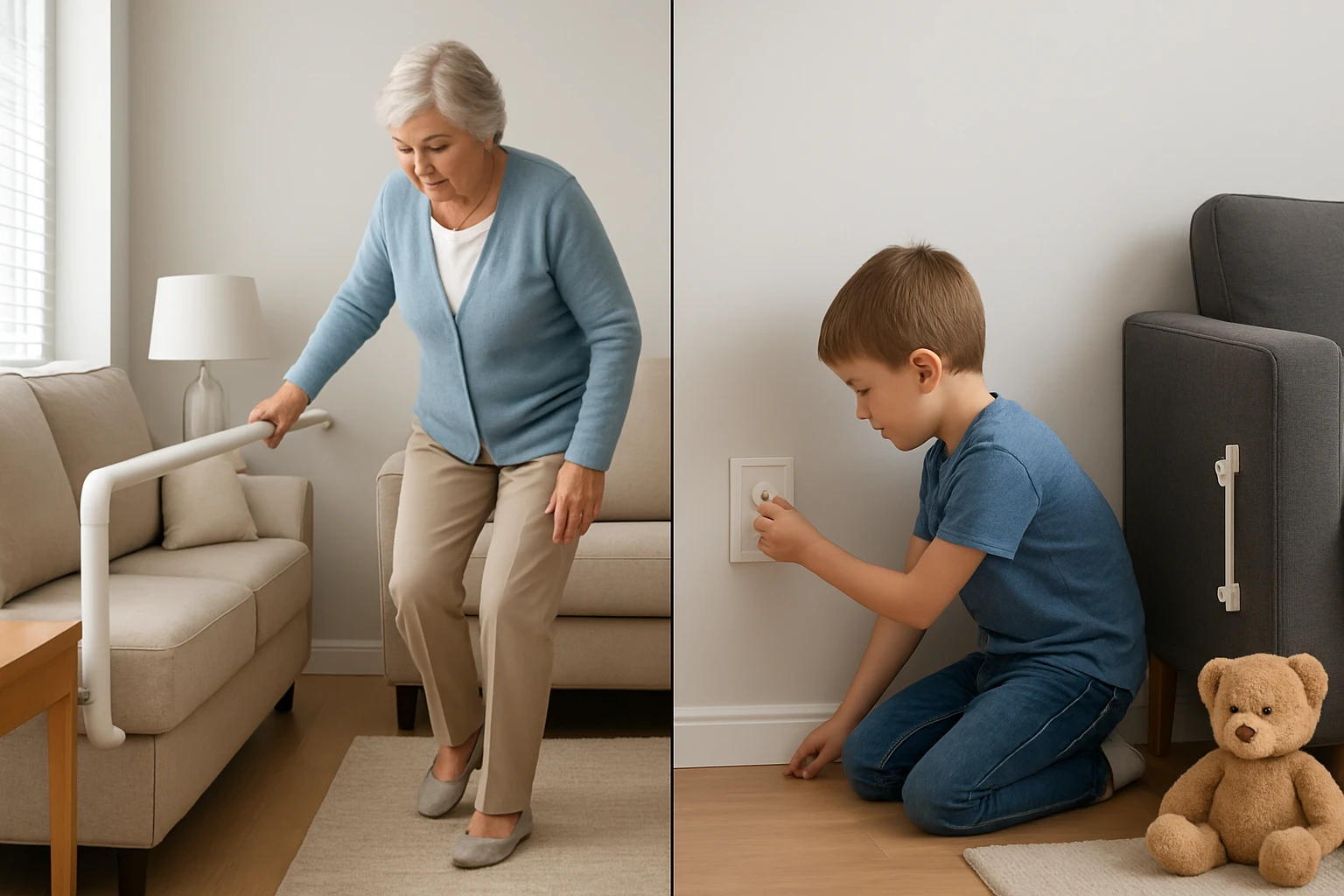

Senior‑Proofing vs Child‑Proofing: The Ultimate Guide to Home Hazards, Risks, and Safety Solutions
Introduction
The modern household often contains occupants of varying ages, abilities, and needs. Senior‑proofing and child‑proofing share the common goal of reducing accidental injuries, yet they address distinct risk profiles. This guide explains the scope of each approach, outlines the most prevalent home hazards, and presents evidence‑based strategies for mitigation. Readers will learn how to assess their environment, select appropriate safety devices, and implement best‑practice habits that protect both seniors and children without compromising comfort.
By the end of the article, homeowners will be equipped to conduct a thorough safety audit, compare product features, and make informed purchasing decisions. The recommendations include three highly rated Amazon products that complement the discussed strategies.
Background and Context
Accidental injuries remain a leading cause of emergency‑room visits for both older adults and young children. According to public‑health data, falls account for approximately 30 % of injuries among seniors, while suffocation and entrapment dominate childhood incidents. Understanding the physiological and behavioral differences that drive these statistics is essential for effective risk reduction.
Senior‑proofing focuses on mitigating reduced balance, slower reaction time, and visual impairments. Common interventions involve stabilising flooring, improving lighting, and installing grab‑bars. Child‑proofing, by contrast, addresses curiosity, limited motor control, and the tendency to explore confined spaces. It emphasizes barriers, lockable compartments, and tamper‑resistant hardware.
Both approaches benefit from a layered safety model: environmental modification, behavioural training, and, when necessary, assistive devices. The following sections break down each layer, integrating product recommendations where they provide measurable value.
Key Home Hazards and Risk Categories
Identifying hazards is the first step toward a resilient safety plan. The table below categorises the most frequent dangers for seniors and children, highlighting overlapping concerns.
| Hazard Category | Senior Risk | Child Risk |
|---|---|---|
| Falls | Uneven flooring, loose rugs, poor lighting | Climbing furniture, slippery surfaces |
| Entrapment | Stuck fingers in cabinets, narrow gaps | Doors, drawers, appliance latches |
| Access to Dangerous Items | Medication bottles, cleaning chemicals | Sharp objects, hot appliances |
| Fire/Heat | Delayed response to smoke alarms | Playing with matches, stovetop access |
Each category can be addressed through targeted modifications, many of which are inexpensive and DIY‑friendly. The sections that follow describe practical solutions and integrate the three featured products where appropriate.
Environmental Modifications for Senior‑Proofing
Improving the physical environment reduces the likelihood of falls and improves independence. Key actions include:
- Install non‑slip mats in bathrooms and kitchens.
- Replace high‑gloss flooring with low‑sheen, textured surfaces.
- Upgrade lighting to at least 300 lumens per room, using motion‑sensor switches.
- Place sturdy grab‑bars near toilets, bathtubs, and stairwells.
While these measures do not require specialized products, they lay the groundwork for the more specific safety devices discussed later.
Environmental Modifications for Child‑Proofing
Children benefit from barriers that limit access to hazardous zones. Recommended modifications include:
- Secure cabinets containing medicines or cleaning agents with lockable latches.
- Use corner protectors on sharp furniture edges.
- Place safety gates at the top and bottom of stairs.
- Cover electrical outlets with tamper‑proof inserts.
These simple steps dramatically reduce the chance of accidental poisoning, cuts, or falls.
Door Reinforcement Solutions
Doors represent a critical point of vulnerability for both seniors and children. A sturdy door reinforcement can prevent forced entry, reduce the effort required to open a door during an emergency, and limit a child's ability to exit a room unsupervised.
The first product to consider is the EverPlus Door Reinforcement Lock. This 3‑inch stop metal lock is engineered with eight screws—four long and four short—allowing installation on a variety of inward‑swinging doors. It claims to withstand up to 800 lbs of force, which is twelve times stronger than a standard deadbolt. The lock features a spring‑loaded mechanism that can be opened with a simple slide motion, ensuring rapid egress in emergencies. At a price of $16.98 and a rating of 4.7 / 5 from 7,285 reviewers, it offers a cost‑effective balance of security and usability.
For households that prefer a silver‑finished aesthetic, the AceMining Door Reinforcement Lock provides comparable strength. Crafted from a sturdy alloy, it also endures 800 lbs of force, but the manufacturer advertises sixteen times the strength of a normal deadbolt. Installation requires eight screws and can be completed within five minutes using a power drill. Users praise its ease of operation—simply pinch the top and bottom grooves to swing the lock open. Priced at $10.79 with a 4.7 / 5 rating from 5,061 reviews, it is an economical alternative for budget‑conscious consumers.
Both locks incorporate child‑proofing features: a spring‑loaded design that resists accidental opening by toddlers, while still allowing an adult to disengage quickly. When selecting between them, consider aesthetic preference, price sensitivity, and the specific door hardware configuration.
Refrigerator and Cabinet Security
Children often seek snacks or toys stored in refrigerators and cabinets, creating both nutritional and safety concerns. The RORMGO Refrigerator Lock addresses this issue with a key‑operated latch that adheres via strong stickers, eliminating the need for drilling. The lock is compatible with most standard refrigerators, freezers, and can be repurposed for drawers, windows, or cabinets. Its durable construction ensures long‑term performance, and the inclusion of two keys provides a spare for emergencies. At $8.99 and a rating of 4.4 / 5 from 3,010 reviewers, it offers an affordable, non‑intrusive solution for child‑proofing high‑traffic appliances.
While seniors may not require refrigerator locks for safety, the product can assist individuals with limited dexterity who might unintentionally open the door and cause temperature loss. The adhesive installation also benefits renters who cannot modify door surfaces permanently.
Comparison and Selection Guide
Choosing the right safety device depends on several criteria: strength, ease of installation, aesthetic integration, and the specific user group. The table below summarises the three featured products.
| Product | Primary Use | Force Resistance | Installation | Price | Rating |
|---|---|---|---|---|---|
| EverPlus Door Reinforcement Lock | Door security for seniors and children | 800 lbs (12× deadbolt) | Power drill, 5 min | $16.98 | 4.7/5 |
| AceMining Door Reinforcement Lock | Door security with silver finish | 800 lbs (16× deadbolt) | Power drill, 5 min | $10.79 | 4.7/5 |
| RORMGO Refrigerator Lock | Cabinet/refrigerator child‑proofing | Not applicable | Sticker‑on, no tools | $8.99 | 4.4/5 |
When the priority is maximum door reinforcement, the AceMining model offers the highest force rating at the lowest price. If a homeowner values a quick, tool‑free installation for appliances, the RORMGO lock is the optimal choice. For a balance of strength, brand reputation, and child‑proofing convenience, the EverPlus lock remains a solid all‑rounder.
Best Practices & Tips
- Conduct a quarterly safety walk‑through. Document any new hazards that arise from furniture rearrangement or seasonal changes.
- Label all safety devices with a discreet, colour‑coded system so that caregivers can quickly identify senior‑specific versus child‑specific hardware.
- Maintain a spare key for each lock in a fire‑proof safe. Rotate the keys annually to ensure they remain functional.
- Educate all household members on the operation of each device. Demonstrations should be repeated with children at least once per month.
- Combine passive solutions (e.g., grab‑bars) with active monitoring technologies such as motion sensors or smart cameras for comprehensive coverage.
Frequently Asked Questions
1. Do door reinforcement locks interfere with fire‑escape routes?
Both the EverPlus and AceMining locks are designed to release with a simple sliding motion, allowing rapid egress. They should never replace a dedicated fire‑rated door, but they do not impede standard evacuation procedures.
2. Can I install the refrigerator lock on a glass‑door fridge?
The RORMGO lock relies on adhesive stickers that bond to smooth surfaces. While it adheres to most metal and plastic finishes, glass doors may require a specialised suction‑cup variant, which is not included in the current product line.
3. How often should I check the screws on a door reinforcement lock?
Inspect the eight screws quarterly for loosening. Tighten any that have shifted, especially after heavy use or seasonal temperature changes that can affect wood expansion.
4. Are these products covered by warranty?
EverPlus offers a five‑year after‑sale service, while AceMining and RORMGO provide standard manufacturer warranties ranging from one to two years. Verify warranty details on the Amazon product page before purchase.
5. Will these locks work on outward‑swinging doors?
Both door reinforcement models are engineered for inward‑swinging doors. For outward‑swinging configurations, consult the manufacturer for a compatible kit or consider a different security solution.
Conclusion
Senior‑proofing and child‑proofing share the overarching goal of creating a safe living environment, yet they address distinct physiological and behavioural risk factors. By systematically identifying hazards, applying targeted environmental modifications, and selecting appropriate hardware, homeowners can dramatically reduce the likelihood of injury. The featured products—EverPlus Door Reinforcement Lock, AceMining Door Reinforcement Lock, and RORMGO Refrigerator Lock—provide reliable, affordable options that complement a broader safety strategy.
Implementing the best‑practice tips and conducting regular safety audits will ensure that the home remains a secure sanctuary for occupants of all ages.
Products Featured in This Guide
EverPlus Door Reinforcement Lock
Price: $16.98
Rating: 4.7/5 (7,285 reviews)
Why featured: Provides robust 800 lb resistance, child‑proof spring‑loaded design, and easy DIY installation for both senior and child safety.
AceMining Door Reinforcement Lock
Price: $10.79
Rating: 4.7/5 (5,061 reviews)
Why featured: Offers the highest force rating at an economical price, with a sleek silver finish and quick installation.
RORMGO Refrigerator Lock
Price: $8.99
Rating: 4.4/5 (3,010 reviews)
Why featured: Non‑drill adhesive installation, universal fit for fridges and cabinets, and includes two keys for emergency access.

