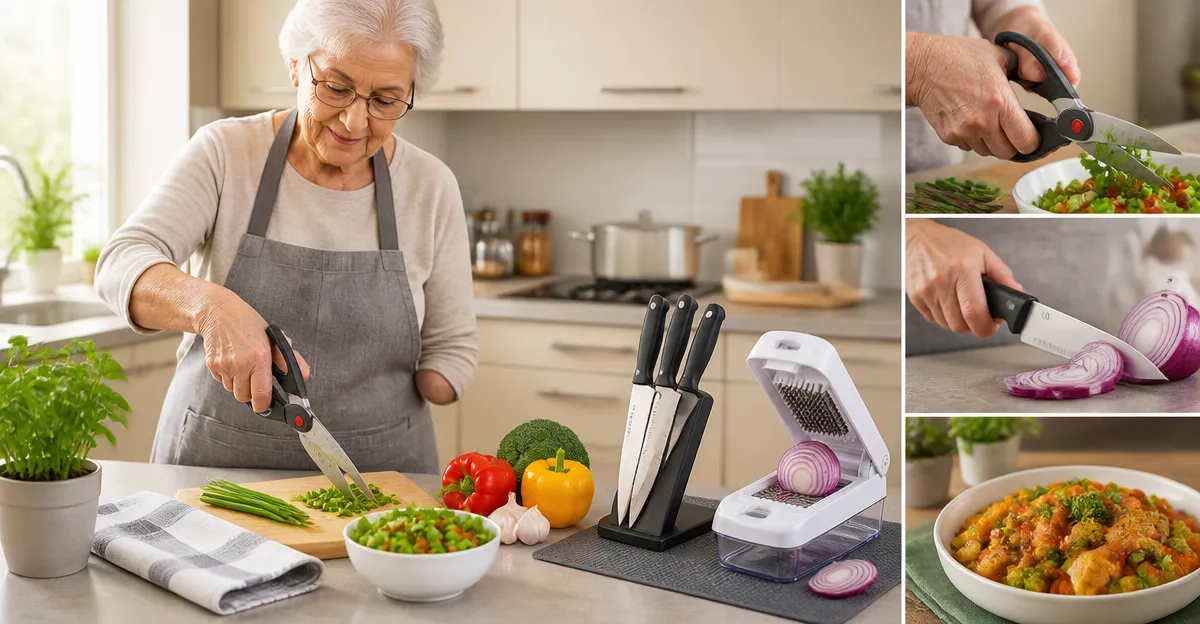
Guide to One-Handed Cooking for Seniors: Easy Recipes & Safety Tips
Introduction
One‑handed cooking empowers seniors to maintain independence while preparing nutritious meals. This guide explains the essential techniques, safety considerations, and product recommendations that enable a single‑handed approach. Readers will learn how to select appropriate tools, adapt common recipes, and avoid common hazards in the kitchen. The information presented balances practical advice with evidence‑based recommendations, ensuring that one‑handed cooking is both efficient and safe.
Background and Context
Age‑related changes such as reduced grip strength, limited dexterity, and balance challenges often necessitate modifications to traditional cooking methods. One‑handed cooking does not require specialized training; rather, it relies on ergonomic tools, stable work surfaces, and systematic workflow. Understanding the anatomy of kitchen tools, the physics of cutting, and the principles of food safety forms the foundation for successful adaptation. By recognizing these factors, seniors can reduce the risk of injury while preserving the pleasure of home‑cooked meals.
Essential One‑Handed Cooking Tools
Appropriate tools are the cornerstone of a safe one‑handed cooking routine. The following products have been selected for their ergonomic design, durability, and positive user feedback.
- KitchenAid All‑Purpose Shears – Heavy‑duty stainless steel blades with micro‑serrations, soft‑grip handle, and protective sheath. Rated 4.8/5 from 71,817 reviews and priced at $7.59.
- Astercook 13‑Piece Knife Set – Includes chef, slicing, Santoku, and utility knives with anti‑rust coating and blade guards. Rated 4.8/5 (reviews not listed) and priced competitively.
- Hydro2Go Onion Slicer – Ten stainless‑steel prongs, wide ergonomic handle, protective cover, and dishwasher‑safe construction. Rated 4.8/5 from 9 reviews and priced at $3.99.
Each of these tools reduces the need for two‑handed manipulation, thereby enhancing safety and efficiency. The following subsections detail how they can be integrated into everyday cooking tasks.
Cutting and Trimming with KitchenAid All‑Purpose Shears
The KitchenAid All‑Purpose Shears provide a reliable alternative to a traditional knife for tasks such as trimming poultry, cutting pizza, and opening packages. The micro‑serrated edges grip food securely, preventing slippage when one hand holds the shears and the other stabilises the ingredient. The soft‑grip handle distributes pressure evenly, reducing hand fatigue during prolonged use. The included protective sheath safeguards the blades when not in use, extending the tool’s lifespan.
Precision Slicing with Astercook 13‑Piece Knife Set
The Astercook set offers a range of blade lengths and profiles, allowing seniors to select the most appropriate knife for each ingredient. The anti‑rust coating protects the steel from corrosion, while the non‑stick surface facilitates easy cleaning. Blade guards ensure safe storage and transport, which is particularly valuable for individuals with limited mobility. The chef’s knife (8 inches) excels at chopping vegetables, whereas the Santoku (7 inches) provides a rocking motion that can be performed with a single hand while the other hand steadies the cutting board.
Uniform Slices with Hydro2Go Onion Slicer
The Hydro2Go Onion Slicer eliminates the need for repetitive knife strokes. Ten stainless‑steel prongs hold the vegetable in place, and the wide handle keeps the user’s hand away from the cutting edge. By guiding the knife along a fixed line, the slicer produces consistent rings or slices with a single downward motion. The protective cover prevents accidental cuts when the tool is stored, and the hanging hook design enables convenient placement within arm’s reach.
One‑Handed Cooking Techniques
Beyond tools, specific techniques enable efficient one‑handed preparation. The following methods have been refined for safety and speed.
- Stabilise the Work Surface: Use a non‑slip cutting board with a damp towel underneath. This prevents movement while the user applies pressure with one hand.
- Employ the “Rock‑and‑Pull” Motion: When using a knife, hold the handle firmly and pull the blade toward the body while rocking the tip against the board. This motion reduces the need for a second hand to guide the blade.
- Utilise Pre‑Cut Ingredients: Purchase pre‑diced vegetables or pre‑sliced meats when possible. This reduces the amount of cutting required and limits exposure to sharp tools.
- Adopt the “Clamp‑and‑Cut” Strategy: Place a food item between two stable objects (e.g., a bowl and a plate) and cut with a single‑handed tool while the other object provides resistance.
These strategies, combined with the recommended tools, create a workflow that minimises strain and maximises safety.
Comparison and Selection Guide
| Feature | KitchenAid All‑Purpose Shears | Astercook 13‑Piece Knife Set | Hydro2Go Onion Slicer |
|---|---|---|---|
| Primary Use | Cutting, trimming, opening packages | Versatile slicing, chopping, mincing | Uniform slicing of onions and similar produce |
| Material | Stainless steel blades, soft‑grip handle | Stainless steel blades with anti‑rust coating | Stainless steel prongs, durable plastic handle |
| Safety Features | Protective sheath, non‑slip grip | Blade guards for each knife | Protective cover, hanging hook |
| Price | $7.59 | Varies (set price not listed) | $3.99 |
| Average Rating | 4.8/5 (71,817 reviews) | 4.8/5 (reviews not disclosed) | 4.8/5 (9 reviews) |
When selecting a tool, seniors should consider the specific tasks they perform most frequently. For occasional trimming and package opening, the KitchenAid shears offer a compact, low‑cost solution. For comprehensive cutting needs, the Astercook set provides a full range of blades. For repetitive slicing of onions, tomatoes, or potatoes, the Hydro2Go slicer delivers consistent results with minimal effort.
Best Practices & Tips
The following actionable advice reinforces safety and efficiency beyond tool selection.
- Maintain a clutter‑free workspace; remove obstacles that could cause trips or spills.
- Keep knives and shears sharpened; dull blades require greater force and increase the risk of slipping.
- Wear cut‑resistant gloves when handling sharp tools, especially for individuals with reduced sensation in the fingertips.
- Store frequently used tools within easy reach, using magnetic strips or wall‑mounted hooks to avoid bending.
- Label pantry items with large, high‑contrast fonts to reduce the need for fine motor manipulation.
- Schedule regular kitchen safety audits to check for loose handles, worn grips, or broken components.
By integrating these habits, seniors can create a kitchen environment that supports independence and reduces the likelihood of accidents.
Frequently Asked Questions
- 1. Can I use the KitchenAid shears for meat preparation?
- Yes, the micro‑serrated stainless steel blades are designed to cut poultry, beef, and pork with clean, precise slices. It is advisable to clean the shears immediately after use to prevent bacterial growth.
- 2. How often should I sharpen the knives in the Astercook set?
- Professional chefs recommend sharpening knives when the edge no longer slices effortlessly. For home use, a sharpening stone or electric sharpener applied every six months typically maintains optimal performance.
- 3. Is the Hydro2Go slicer safe for cutting soft fruits such as strawberries?
- The slicer is optimised for firmer produce. For very soft items, the prongs may slip, so a traditional knife or a specialized fruit slicer is preferable.
- 4. What is the best way to store the protective sheath for the shears?
- The sheath should be kept in a dry location, preferably attached to a kitchen drawer or hung on a hook to prevent accidental contact with other utensils.
- 5. Are these tools covered by warranties?
- The Astercook knife set includes a lifetime warranty that covers manufacturing defects. The KitchenAid shears and Hydro2Go slicer are covered by the standard Amazon return policy within 30 days of purchase.
Conclusion
One‑handed cooking empowers seniors to preserve culinary independence while minimising physical strain and safety risks. By selecting ergonomic tools such as the KitchenAid All‑Purpose Shears, Astercook 13‑Piece Knife Set, and Hydro2Go Onion Slicer, and by applying the techniques and best practices outlined in this guide, seniors can enjoy nutritious meals with confidence. Continuous attention to tool maintenance, workspace organisation, and personal safety will sustain a positive cooking experience for years to come.
Products Featured in This Guide
KitchenAid All‑Purpose Shears
Price: $7.59 | Rating: 4.8/5 (71,817 reviews)
Featured because the ergonomic soft‑grip handle, micro‑serrated stainless steel blades, and protective sheath enable safe one‑handed cutting of a wide variety of kitchen tasks.
Astercook 13‑Piece Knife Set
Price: Not listed | Rating: 4.8/5
Featured because the set provides a comprehensive range of knives with anti‑rust coating and blade guards, allowing seniors to perform diverse one‑handed cutting tasks safely.
Hydro2Go Onion Slicer
Price: $3.99 | Rating: 4.8/5 (9 reviews)
Featured because the ten stainless‑steel prongs and wide handle create a stable platform for uniform slicing, reducing the need for repeated knife strokes and enhancing one‑handed efficiency.